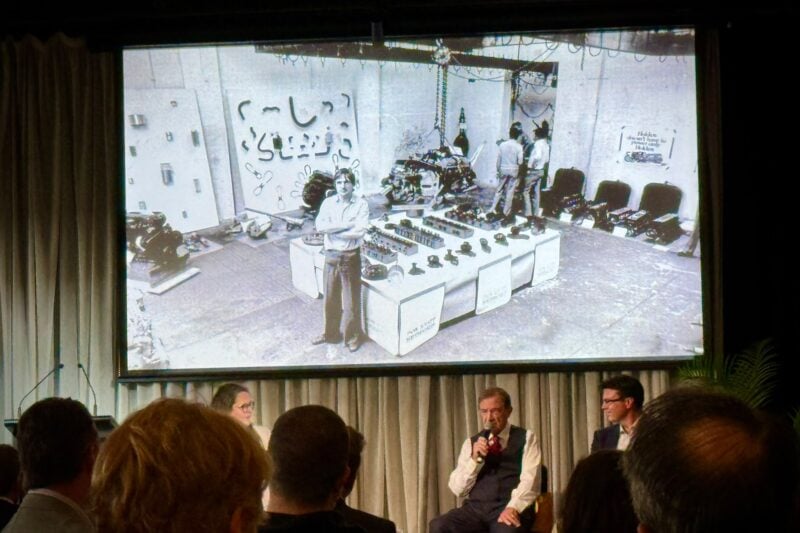
I didn’t expect to be talking about philosophy and fishing with one of Australia’s leading philanthropists, though there you go.
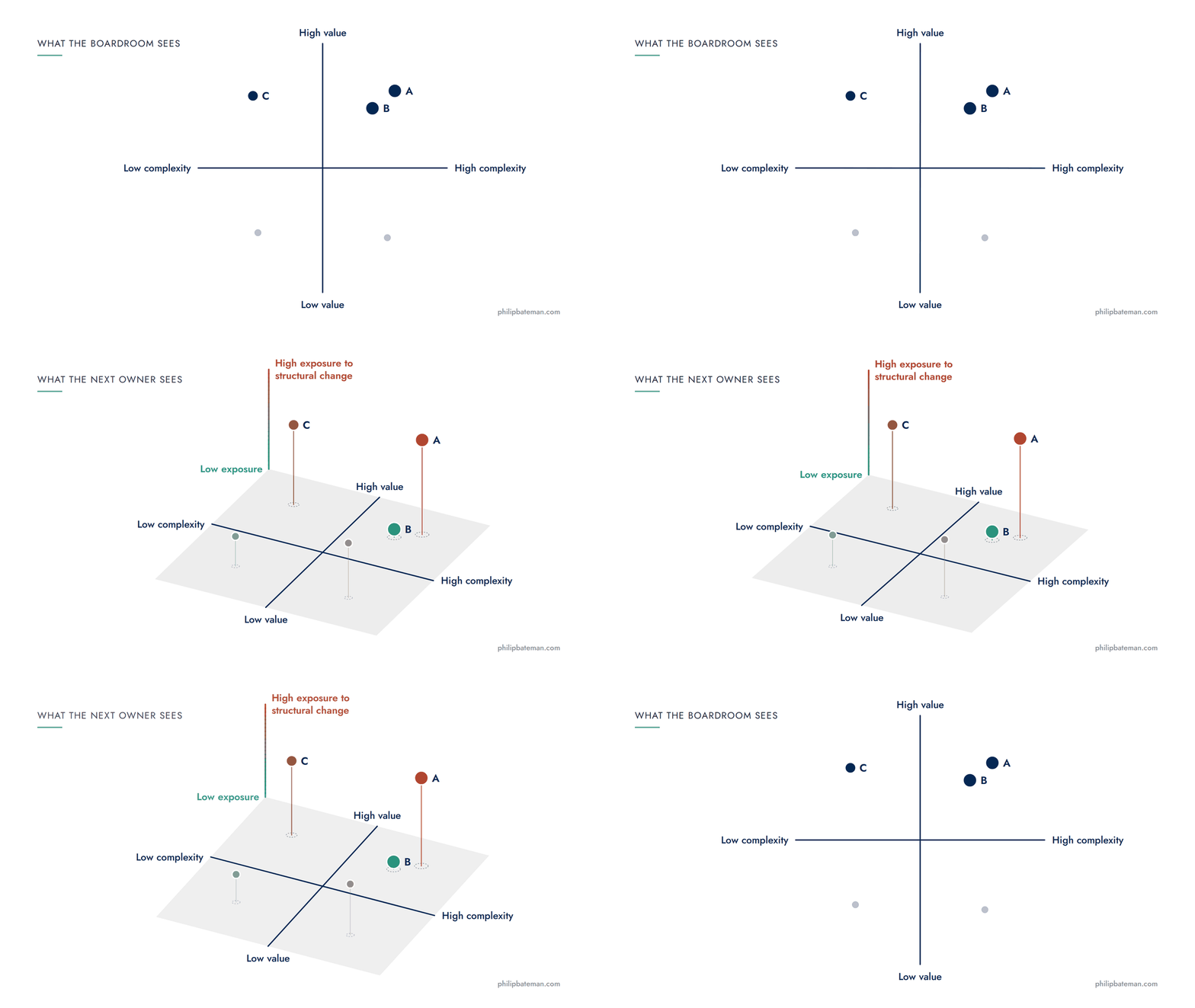
Money, money, money men, you know the drill: dark suit, white shirt, blue tie.
The gate that holds back the tide against attacks on your personal fortune.
Keeping it safe and steadily growing, oscillating within a few percentage points of every index fund on earth; a proud day when it’s up a few per cent each year, and a sweat-inducing, pants-quivering April when your portfolio lags the market a little.
Oh, you must be exposed to materials, yes, yes, so the big questions – BHP, or Rio?
Not really a big question from a client’s perspective.
What about gambling? Are we inching your family’s fortune ahead by emptying pensioners’ wallets, glued to their machines in dingy RSLs? High five to Aristocrat on that one.
Weapons? Active deforestation? Highly concentrated fertiliser that strips our ancient farmland of its chances for long-term survival?
I might be sounding a bit arm-wavy here, but this is a basic ethics screen for investment.
This isn’t maths; it’s philosophy
I think mining and resources are a critical part of our society. I’ve worked with clients in these sectors for two decades, and they are some of the hardest-working, most innovative people I have ever met – AND I’m still excited about Fortescue‘s RealZero 2030 program because, by and large, mining is massively polluting.
What’s philosophy got to do with your money men (or women)?
Well… everything, it turns out.
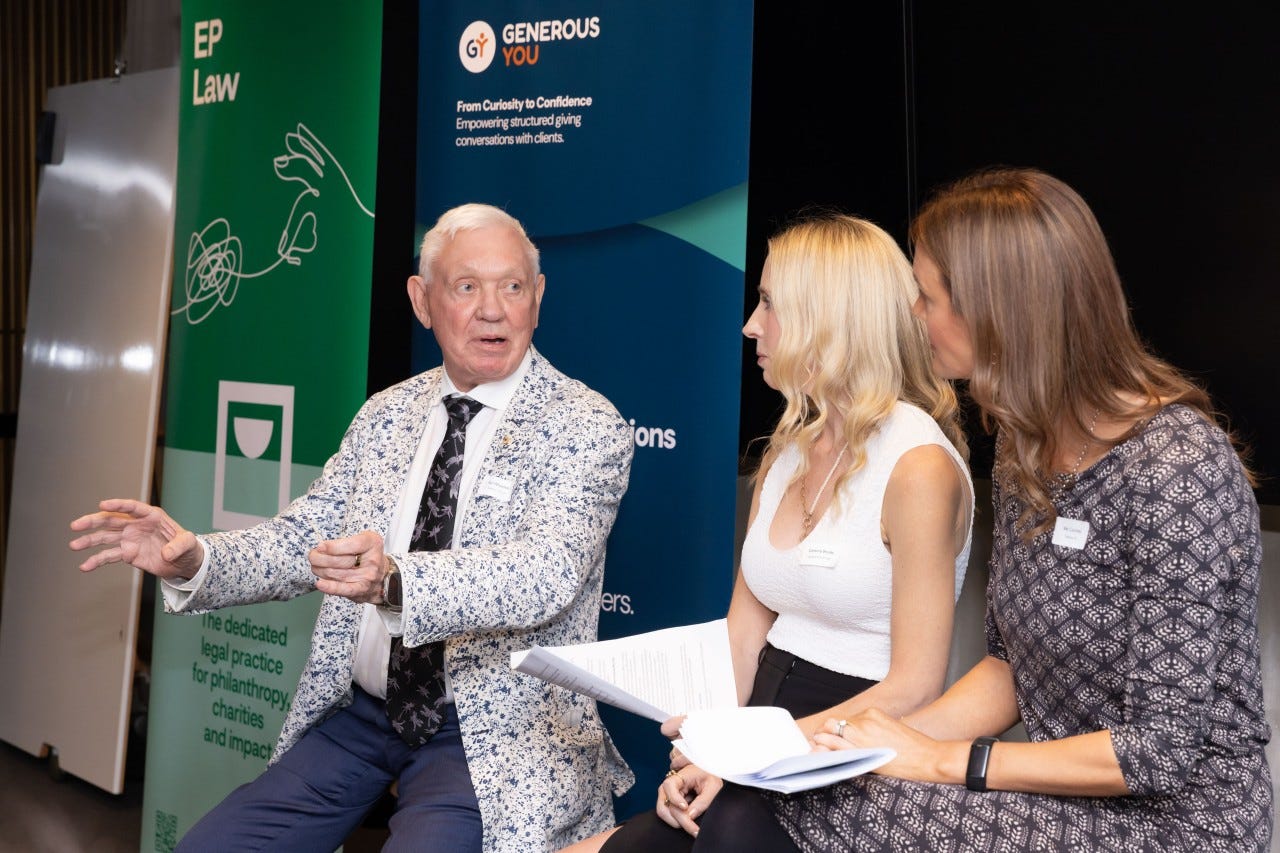
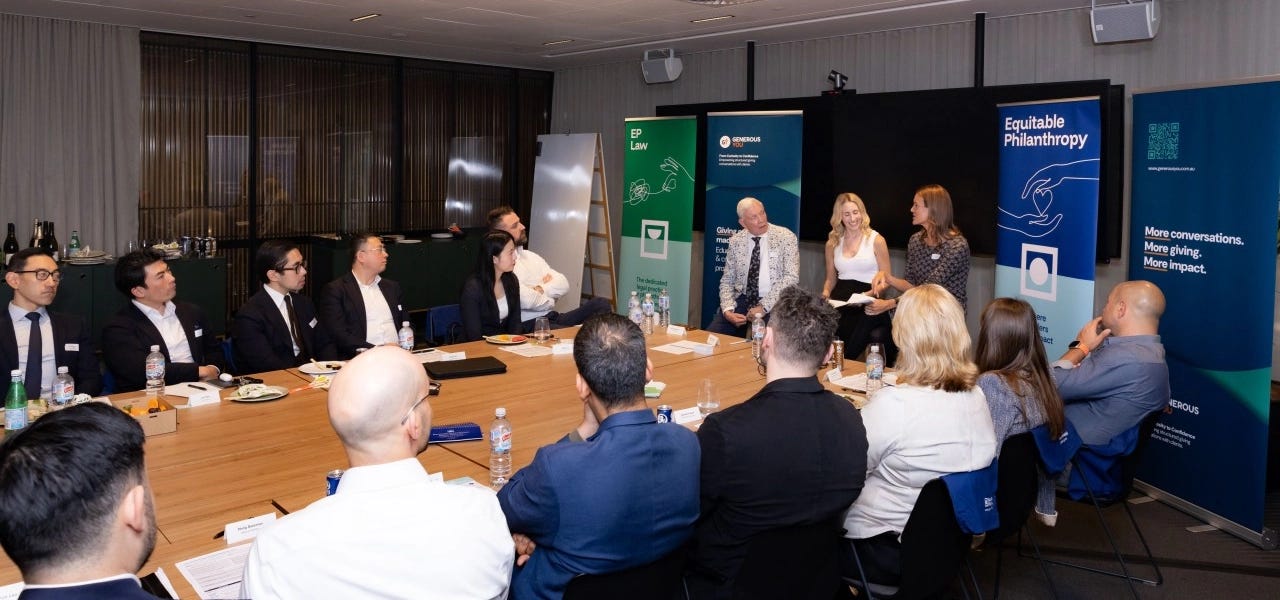
As part of the Melbourne Business Society, I recently attended lunch with Generous You and Equitable Philanthropy, and I got to sit down for a short chat with Paul Wheelton AM CGSJ, who was the main speaker, and is a stalwart for using one’s personal wealth to create positive change in the world.
You can read more about how he does that at Wheelton.com.au.
… we’re not mean-spirited, we’re ill-informed?
Paul said this to me directly, and I think it sums up the whole event perfectly.
Advisors aren’t intentionally holding back – the reality of our post-colonisation Australian society is that we haven’t been here for long – our 2nd and 3rd generations are taking over businesses, we’re a relatively new country, ubiquitous access to information through the internet is new, environmental awareness, climate change, long-term health awareness and self-care are relatively new ideas.
Add in the idea that our superannuation funds are ‘universal owners’; now they’ve spent so long putting 10% of everyone’s weekly wages into… well, anything and everything, and they are getting blasted for not being aware of where money is funding things that don’t align with their constituents’ values.
Now you may not be responsible for 100 billion dollars like HESTA is (circa 2025), though colleagues in the room shared that when handling business exits and handing over $20, $30 and $50 million cheques, they hadn’t thought to ask the family what they planned to do with the money.
And that is the purpose of Generous You, to help individuals and advisers get better informed.
If you’re an adviser, they’ve got a growing list of tools you can use to kickstart the conversation in their Education Hub, and even if you’re not, advise yourself, for example;
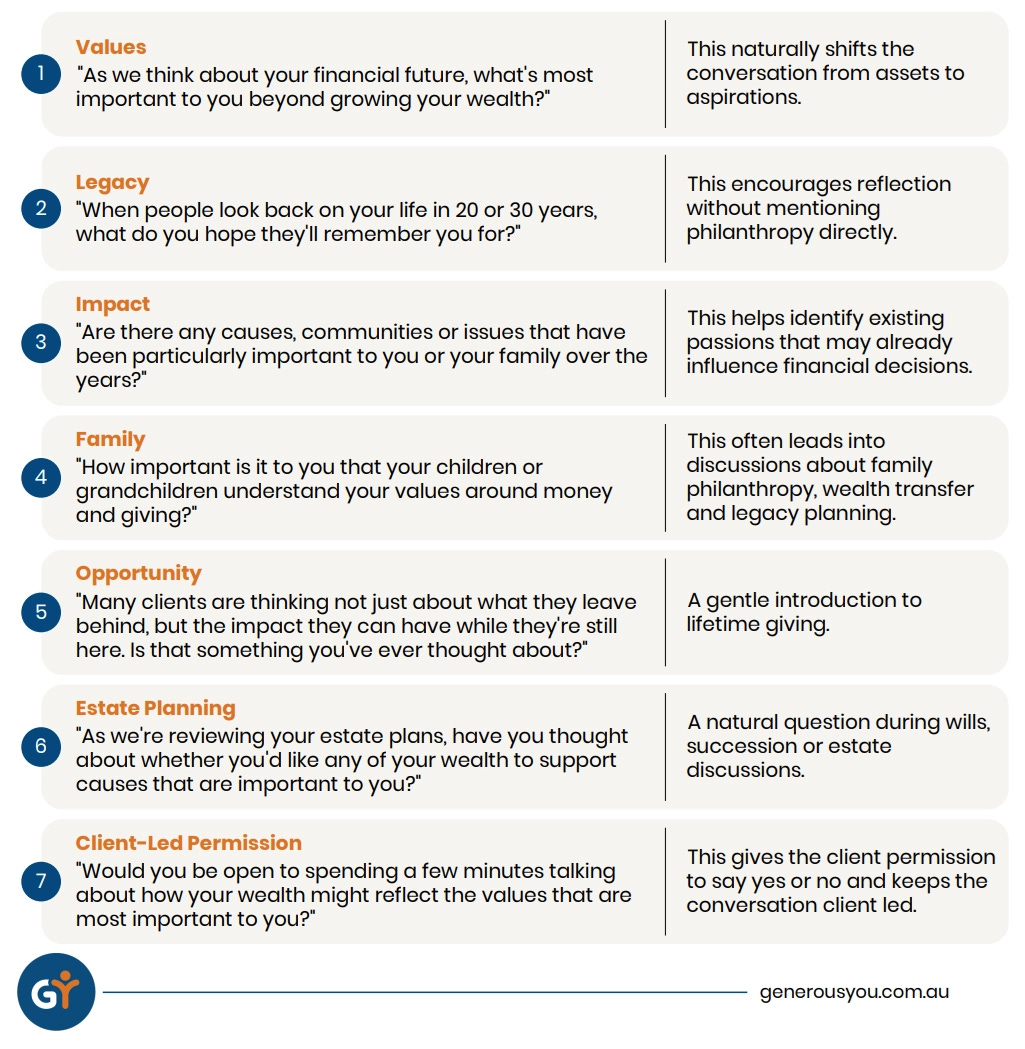
Be a big fish in a small pond
This was another thing I heard Paul say, and I’ve seen the benefit time and again with other clients, family and friends.
“Be a big fish in a small pond” – he doesn’t want to give away millions to Australia’s largest charities. He doesn’t believe it will make a dent. Though building a school in Bali? Directly providing food and education to people in front of him?
That’s a pond where he can be a big fish.
I’ve had clients who thought that rather than having kids, they’d protect a glade of national forest. Others are making sure their kids join them to serve community meals to those in need on weekends, while they build the country’s most advanced robotic factories.
The easiest way I’ve personally found to be a big fish in a small pond is Kiva (www.kiva.org).
And it doubles as a cracking way to teach geography!
Kiva is microfinance – add the amount of funds you’re willing to loan out, select loans you want to support in $25 increments of the total ask, and then get paid back.
No matter how old you are, whether it’s with your kids, husband or wife, I’ll bet if you sit down for 30 minutes and say ‘we’re going to find some people to support on Kiva’ it’ll reawaken a spark of your hope in humanity.
I’ve been using Kiva since March 2013 (visit my lender profile), and with a small amount of money consistently reloaned as it’s paid back, I’ve been part of lending to people in 66 countries.
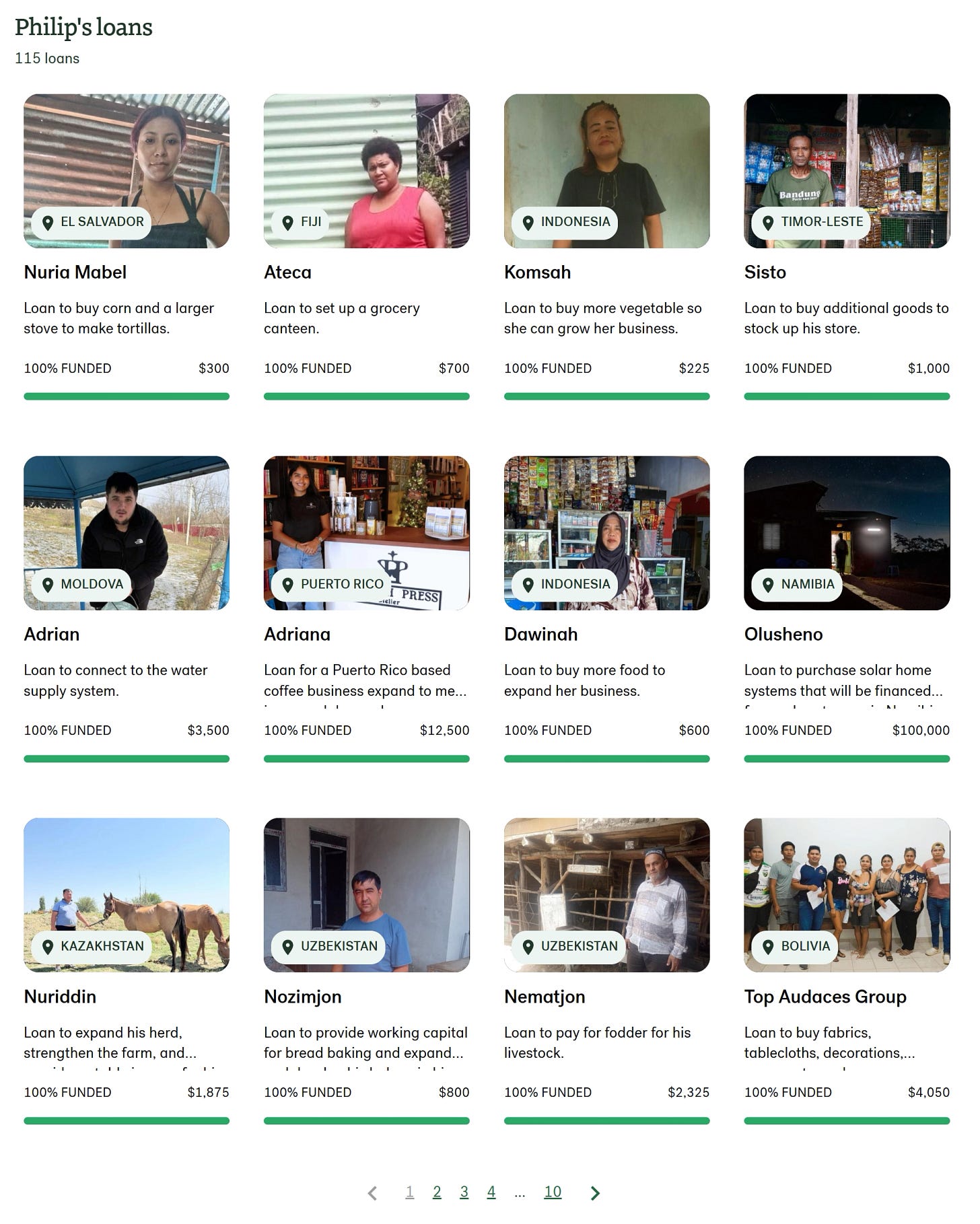
And you can go as large as you want – the size of your pond is limited only by your appetite and resources – over the past few years I’ve:
- Had my relationship to indigenous Australian wild-life transformed, attending a Creatures of the Night tour at Odonata Foundation‘s Mt Rothwell 470 hectares of protected environment in the YouYangs, Victoria.
- Heard how local residents are buying back their mainstreets from wall streets, spurred on by the Impact Finance Center, Founded by Dr. Stephanie Gripne in Denver, Colorado.
- Looked at levers to transition the global economy to greater circularity and introduce impact-weighted accounting with Sir Ronnie Cohen, Founder of GSG Impact in Malaga, Spain.
You do you.
But do something.
That’s the point.
Dear Adviser; What if?
What if you became an advocate for your client’s values? What if you helped them expand their influence in the world, publicly or privately?
What if you assessed their available resources and helped them identify a small pond where they could be a big fish?
What if you immediately, tangibly, and emotionally created a significant and positive experience for them and their immediate family?
What do you think that would do to the stickiness of your client relationship?
In a world of dark suits, white shirts, and blue ties, shitting themselves every 11 months when an index fund outperforms them, how would that set you apart from the pack?
Do you even need to be separated from the pack?
Could you simply engage a handful of your best clients and, the next time you set up a values and giving workshop or organise a visit to a specific charitable investment, hold the door open so they can bring their friends that don’t already work with you?
A truly virtuous circle is possible here.