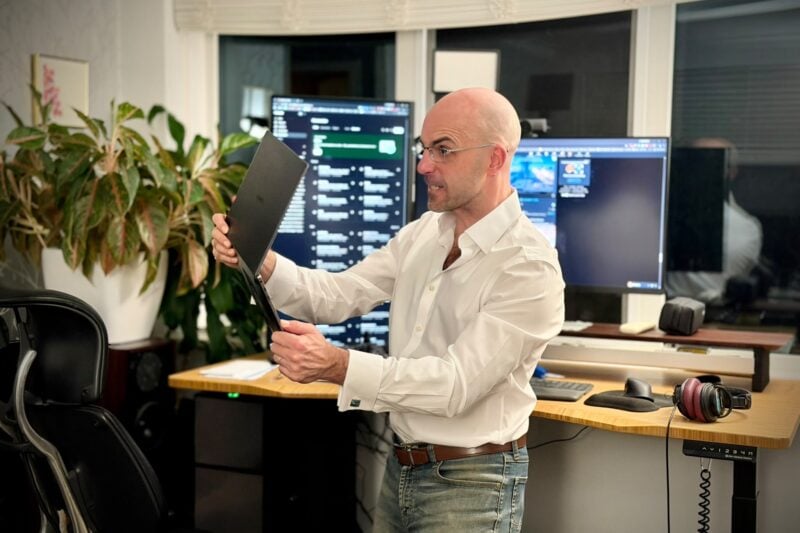
The true stories are the best ones, like Frank Hutchinson at 19 (pictured above with his son Brent Hutchinson, now CEO), naming the business after his older business partner in the startup – Don Kyatt – so he would be taken more seriously, and going into the spare parts business with $300.
Now they are in many places, and you sure learn a few things along the way.

The biggest learning? Be optimistic.
We heard it time and again from the founders and 2nd gen of the businesses.
From cornerstones of Greek Hospitality in Melbourne such as Nikos Cakes and the Vanilla Lounge, to Legacy and Established Family Business Award winners Penrite Oil and ABBE Group.
A few other things that stood out to me
When considering modernisation of processes, people and systems, ask;
Q. What is missing in the business to assist us?
“Our company has teenagers to 92-year-olds; it’s not about age, it’s about attitude”
Q. When hiring, do you hire for heart? Or skills?
Evidently, heart is what matters. People can be taught anything.
We’re the most over-informed and under-reflective people in the history of civilisation

Quite the pivot from optimism, hey? I went home after hearing Jehan Casinader’s closing session and was pretty incensed about the amount of time I’ve wasted on ‘angertainment’ and being the product.
For more than a decade I’ve laughed along as friends said ‘Well, if you’re on Facebook (or Instagram, or Linkedin) and it’s free – that means you’re the product’ – and sure enough, my attention is what they make money on.
Quite a bit, in fact: Meta’s Q2 Revenue for 2026 was $60.801 billion (up 28% year-over-year), with a Net Income of $15.848 billion.
And LinkedIn pulled in around $19.8 billion last fiscal year, which, given the state of the newsfeed and algorithm, I find even more infuriating when it’s $ 70+/month for a premium subscription.
I’m not here to lament blatant capitalism though, no no, I’m here to take about my own wasted life, and perhaps yours!
Jehan asked several pertinent things;
Q. Did anyone teach you how to pay attention?
Q. Do I want to be informed, or outraged?
Because honestly, I don’t need to know about a factory worker strike in the USA, a random chemical spill in Eurasia, the long odds on an election candidate or what news reporters think of someone being blasted on twitter.. it’s all trash.
Not even researched, fact-based journalism; that’s expensive. In most cases, it’s cheap opinion.
And then there are things I could be really upset about but still can’t control, like fuel prices, weather events, overseas conflict, who’s in government, and the inflation rate.
In some respects, I’ve been holding the line by never having notifications on my phone, trying to stay off social media until after 2pm, never having TV news on (or even a TV for twenty years; I’m a pure YouTuber).
Though the rub, and what I came home quite incensed about, is that I’ve dressed up handing my attention over to Meta and the like, by wanting to be, and feeling like I am, “informed”.
The day after the conference, I was in a lift to visit a colleague, and bam, there it was, screaming at me: fear, distraction, from the RED colour to the NEW DEVELOPMENT tagline and the world-in-flames ticker tape at the bottom, compounding the interruption.

Surely if I know more, and can see the patterns, I’m a better citizen/business person/agent of change yada yada.
Nah… turns out, when I want to know something, I go to credible sources, ask good questions and get relevant, contextual answers.
The rest of it?
The ‘Breaking news’, ‘What you need to know about’, ‘You’re doing … thing .. wrong’?
That’s all inanity and noise, wasting my time, my one and only precious life, distracting me and destabilising my joie de vivre.
It’s irrelevant to the quality of my relationship with my wife, my business outcomes, how I care for myself, my social engagements and what I do with my friends.
Your Sphere of Influence
Jehan put it to us beautifully to wrap up the conference;

And wouldn’t you know it, yesterday I had Zoom sessions with two members of a client’s executive leadership team as we work on their strategy for 2027, and the things that matter in the business are the things within our sphere of influence.
The other stuff is noise.
Q. How much time are you spending on things in your sphere of influence?
Q. How much time are you spending being side-tracked on things outside of it?