I spent Thursday with International Fund Managers, Friday with the Australian Institute of Company Directors, Tuesday with Militant Unionists, and Wednesday with the Melbourne Business Society. Everyone’s got a problem.
“Never have a coffee with the bosses”
“Killing Police Officers is a good thing for Democracy”
“The bosses must fear us”
Wait, what are we talking about??
Apparently, the organisers of the room I found myself in didn’t want any video recording of the night, so they could “control the narrative they release at a time when there is a lot of negative focus on the union movement”.
The flyers on the seats said the only way for militant unions to survive was to fight, which seemed like a circular argument, and what did this have to do with the Eureka Stockade?
The Facebook advert I’d responded to was: “Join us to hear speakers discuss The Eureka Stockade & Why It Matters Today, with Q&A, light food and drinks.” – and not to play dumb, I knew it was at a Union headquarters, though that’s why I went – I’m genuinely interested in how our society works and what we can collectively create together.
I didn’t expect the youngest person in the room to lead a standing recital of a pledge on the wall, everyone to be called Brother and Comrade, or to find myself in the front few rows of a packed room whilst many on their feet were cheering to be “the fist of the workers”.
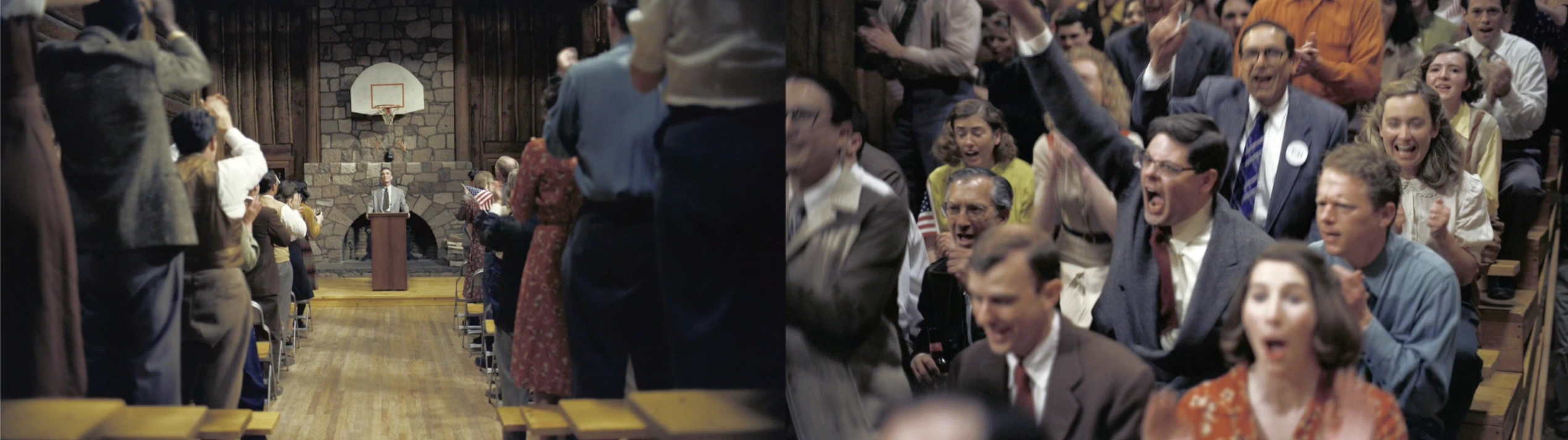
If you’ve seen Oppenheimer, when everyone goes from celebratory to feral as they discuss the successful bombing of Japan, it felt a bit like that; a guy standing near me was clapping so hard at the closing call for violent action he briefly frothed at the mouth.
As it turns out, the guy closing the night had form.
He’d been expelled from his union twenty-odd years ago on internal charges that included bullying and sexual misconduct, and done jail time for violent business incursions.
And it was the perfect logical trap: “The Government won’t save us, the Bosses don’t care, we’re the only ones who can fight against the cost of living crisis”.
The trouble is, that’s stupid – or at least wilfully ignorant for the purposes of rallying a base – regulators set policy, businesses are the structural economy, and everyone’s got a family.
Sure, ‘us vs them’ is great when you want to rile up a mob, though calling for violence and destruction, particularly on large projects when public money is on the line, is implicitly attacking the ‘us’ – because it’s all our money.
10 Days Earlier at the Big End
The Chair of BlueScope was on stage, near on threatening the imminent failure of our nation if we pursue further climate-focused transition to renewables, rather than extending the life of coal plants and ensuring adequate gas supply for people like BlueScope.
This was happening at the Australian Institute of Company Directors Climate and Governance Forum – I thought I’d walked into the wrong conference.
Particularly when I had the top-voted comment in the Q&A section that the host chose to bypass;
“… You told us “We cannot commit to technology that doesn’t exist” – isn’t Fortescue Real Zero 2030 evidence we can? If we truly understand climate science, shouldn’t we aim for real zero, not net?
There was even a nod to Chevron’s Gorgon Carbon Capture and Storage project.
Apparently it’s not “going as well as people hoped” – meaning it stores a quarter of what it was built to catch.
Unless it’s a tax dodge, then it’s doing great.
They spent $3BN on it, can deduct it all against what they might pay in the PRRT, and the Commonwealth and WA Government have agreed to carry the long-term liability for whatever they’ve buried under Barrow Island once the monitoring stops. So, that’s us then, you and me.
Won’t somebody think of the fish?
I was having a bitch about the forum being a front for fossil fuel companies with a consultant who specialises in Mandatory Climate & Carbon Reporting.
He told me to calm down and recognise that “of course though they were just reading from the corporate hymn sheet” – whilst accurate, South Australia spent the best part of a year with toxic foam washing up on its beaches and its fisheries wiped out by algae partying in the warming ocean, so maybe the Big End is where we need action?
Aside from my venting, we were discussing how AASB S2 is impacting our clients.
He called it “An unnecessary burden on small mum and dad business.” I challenged that if you can hit two out of three of $50M in revenue, $25M in assets, or 100 employees, you’re not exactly small, and you can probably stretch to scenario planning.
“Well, why should they? It’s more of a compliance burden, and the extra money they spend doing it- they want to know what value it creates for them?”
Personally, I’d be more worried about analysts figuring out your risk exposure before you do, or insurance companies figuring out you have no strategy to mitigate the macro-disaster your business is sailing into like the Titanic.
Plus, a decent emissions plan wins tenders. Your emissions are your customer’s reportable emissions, so if you can show the people up the chain how you’ll lower theirs, you’ve got a case for them to fund your capex, if you’ve got the chutzpah.
Back to Eureka
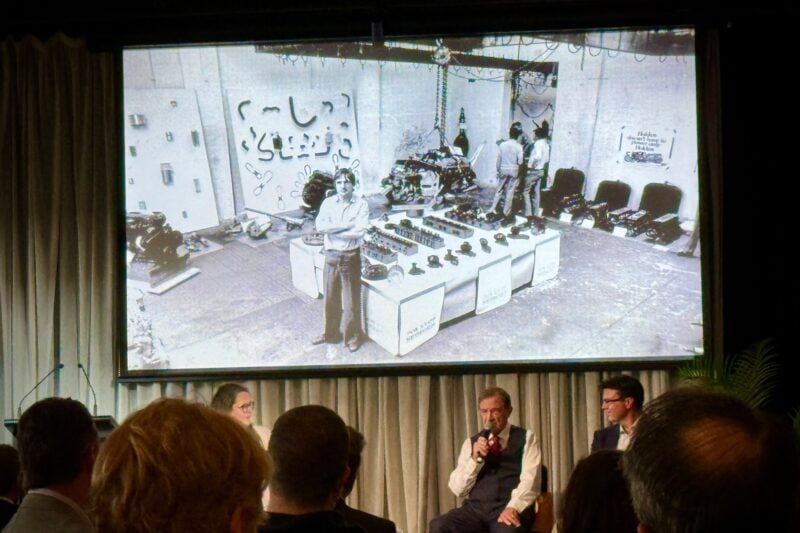
As I heard it, “Smashing Bluestone by Day and Blue Bloods by Night” was from a member of the stockade.
The Southern Cross flag first flew in 1854, and the whole fracas being a revolt against a licence fee imposed on miners to prospect.
Our speaker put it that the fee was also an impost to keep the available ‘slave labour’ of the day in place – the shepherds who had come to Victoria to manage the new land squatters had fenced off for ten pounds a year.
Apparently, the police were also incentivised with a cut of the fines they issued, then stood over miners’ pits demanding they come up and produce their licence.
So as miners lay there, contemplating their futures, they looked up and saw something you can’t see from Europe – the Southern Cross – a unique rallying symbol for every soul seeking an unshackled life from the traditions of Europe.
The flag has been an emblem of the Union movement for over a century, and you’ll know the players of the day if you know Victoria and Melbourne; Lalor, La Trobe, Hotham, Stawell, Redmond Barry, A’Beckett.
And consider, unions have been behind just about every workers’ right there is, particularly in Victoria.
They gave us the eight-hour day in 1856 and the first legal minimum wage anywhere in the world in 1896.
A national basic wage became a thing in 1907, and the 40-hour week from 1948.
In 1985 they won safety reps with the power to stop unsafe work, and across 1986-92 they got superannuation for everyone written into law.
In 2000 they fought for minimum nurse-to-patient ratios, and the list goes on.
Out of Touch with the Working Man
I’m a “boss’s son” – my clients are “bosses”, and I’m my own “boss”.
I’ve had a lot of coffees with them, and myself.
If you cut a few of them open, I won’t pretend there isn’t a fair amount of blue (I’m aiming for purple myself).
Though the idea that they don’t care about their workforce is absurd.
I put that to my mate as we were walking home. He’s a French Revolutionary anarchist at heart, and a farmer, and works part-time in a manufacturing business – the perfect wingman to eat pizza with in a militant union den, no?
He scoffed at me – “They don’t care. Everyone’s replaceable” – Yes, everyone’s replaceable; that’s half the reason I help business owners step back a little and prioritise having a great life, not just working until they die.
But not caring?
I literally have a LinkedIn feed full of clients and colleagues doing their damn best to create positive work environments, celebrations, birthdays and Christmas parties.
All whilst ensuring payroll is met, super is collected, new work comes in and the business can thrive, or at least survive, despite massive economic pressures, the loss of manufacturing and the onslaught of globalisation, further exacerbated by tariffs and endless war.
Drowning in Regulation… and Profit
I know Victorian bosses who are getting slammed with workplace regulations.
One who hired a person to work in their manufacturing and distribution warehouse, who went through several interview stages, engaged eagerly with everyone, signed the contract, then emailed saying “I’m not going to come on Monday; I’m working from home”.
Another had a worker go to the doctor and file for mental health injury and take weeks of leave after their performance report was accidentally emailed to a colleague. At the small-business end, these sorts of things are crippling.
At the big end, they might be less damaging, though the scale of impact is different too;
Wesfarmers has around 120,000 people on the floor of Bunnings, Kmart and Officeworks.
In 2025 the board paid an additional $1.7 billion out on top of its ordinary dividend, which is essentially cash they don’t have a use for that was given to shareholders.
It could have been $14,000 for every employee.
The K-Shaped Economy
I was in the Sofitel ballroom with a room full of wizened elders, actually before any of the above happened, being repeatedly told from the stage that “their money” was being “well cared for” whilst we all snacked on top-shelf finger food.
One fund was ticking along, another had gone stellar, the other outperforming the market by a reasonable percentage.
Then the overall economic outlook, presented on three screens a giant K.
If you had assets and money, top of the K, things were great, and they were going to continue.
If you didn’t, bottom of the K, compounding economic pressures, inflation and cost of living were going to continue to drive you further into the abyss.
Maybe the comrades have a point?