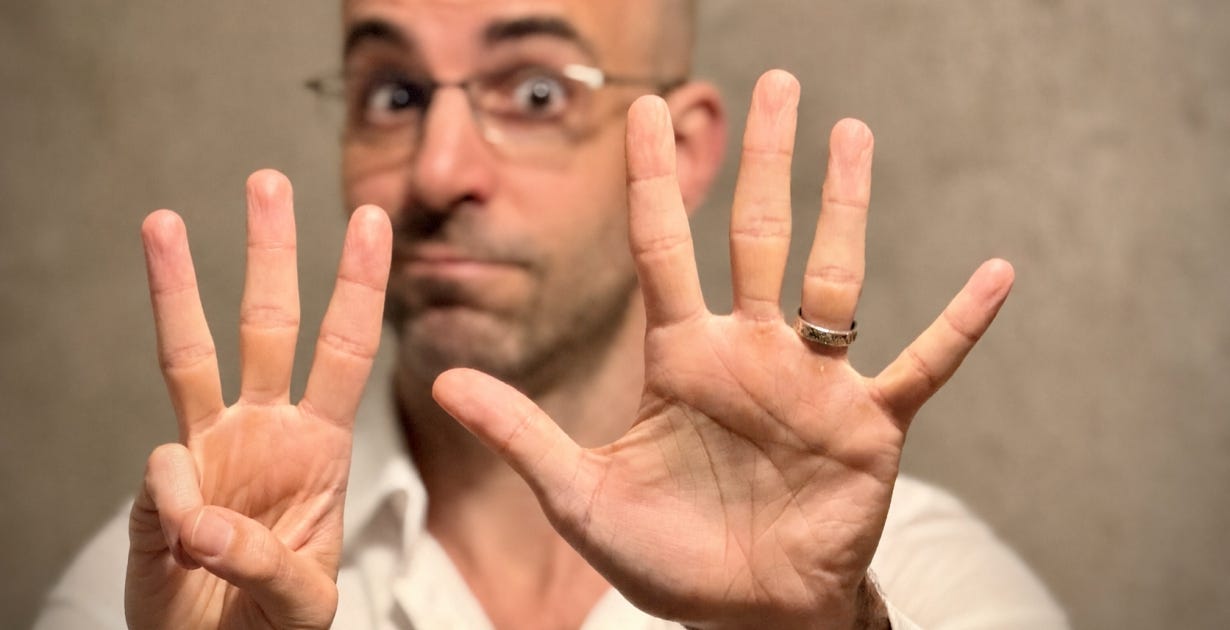
Their names are Nicole, Andrew, Oli, Daryl, Paulina, Lucas, Ryan, Brett, plus my cat.
Don’t get me wrong, I enjoy speaking to many people – my months are chock full of them at networking events, business meetings, and in my hobbies.
I enjoy speaking with all of them.
Why? They have purpose.
Those enjoyable conversations are about something, a direction, an outcome; they matter, though I don’t like the time they take on a soulful level.
I’d rather be sitting quietly, with my cat and my wife – silence is so precious – I’m often reminded of the saying “Is what I’m about to say worth interrupting someone’s silence for?”
Liking 8 people might not seem like a lot, though my head is full of drawers I’m constantly opening and closing.
Things I learn go into drawers, and if I pull out several, I can see obscure cross-references.
I simply don’t dedicate individual drawers to many people, and they aren’t my special interest.
What’s your special interest?
Mine is how things work, and the businesses built around them. And I’m obsessed.
Currently, I’m working on a commercialisation strategy for a multi-national medical technology business.
And in this past month alone, I’ve sat with the founders of some of Australia’s fastest growing and most lucrative plays in private tuition, conveyancing and insurance.
There were even early-morning and late-night chats with US founders who recently passed $100M+ ARR, training and deploying Enterprise AI models.
They are building a new global fund to challenge traditional professional service businesses, and they plan to use their tech to do so.
Cool stuff, though a bit bleeding edge for Australians!
As we commercialise the med-tech business, there’s going to be loads of talking, and I’ll enjoy it all, though I’m not there to be liked.
I’m listening for patterns, leverage and opportunities. I want to find subtle clues we can use to make significant money while doing work that matters.
Having X-Ray Vision
What do you see when you look at the wall? Or a building, car, or toaster?
I look at the wall and see the cladding, think about the framing, the insulation, the conduits inside and the reinforcement.
The plumbing, the planning, the building codes, the designer, the architect fighting with the builder.
The momentary decision to choose single-pane glass as the cheapest option, regardless of its impact on the room’s liveability…
I’m so sensitive to draughts I almost have synesthesia and feel like I can physically see air movement!
Weird hey?
Which begs the question
Are you stuck in professional meetings with people who simply like to talk? Or are they getting something done?
You don’t have to keep sitting in pointless meetings you don’t enjoy, particularly if they don’t create an outcome.
Unless you like the people 😉
If you’re looking for an obsessive second brain to see through your commercial walls, let’s have a chat. And if you’d like to tell me what your special interest is, hit reply, I’ll put it in a drawer!
The whip in parliament is the person who gets everyone in the room to vote.
Want to know someone who can make things happen? Know the Whip.
A client was introducing a proven way to repair the neurology of kids that had experienced intense childhood trauma to the Government; one of the inventors of the Cochlear implant had created it, and they needed to be in front of three relevant Ministers.
So we went to the Whip. Sorted.
Another client has just upended a decade of being stymied in their family business that turns over circa $32M, by getting their mother out of the Owners room, more on that in a tick..
You’re going the wrong way
Making things happen requires introducing ideas and getting feedback – it’s important, though, be aware that when you ask people, they will generally be critical.
It proves they are smart and they’ve made a contribution. Good for them! I prefer a feedback sandwich myself (that’s where you put the shit in the middle, with something encouraging as the bread wrapper on the way in and out).
And when you introduce an idea, concept, or proposal to middle management, they will criticise it and then pass it UP the chain.
The next level will have to give input – usually critical – and change at least one thing (otherwise, why do they exist?).
Then it goes back down, repeat ad nauseam.
STOP.
You’re going the wrong way.
Don’t start in the middle.
Start at the top. As high as you can go.
The top is who the middle works for.
And you might be in the wrong ROOM
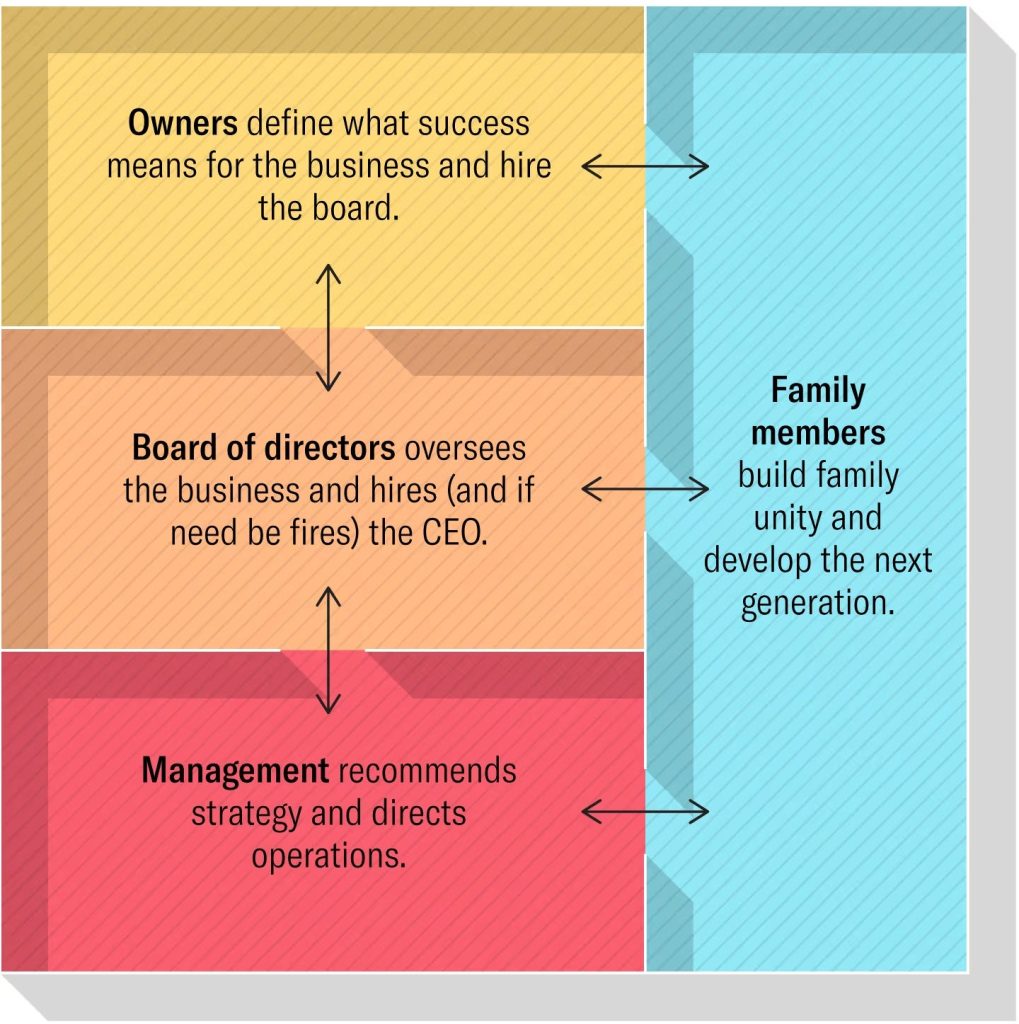
This is a beautifully simple yet powerful concept (aren’t all the best ones?) from Banyan Global.
The Four Rooms: Owners, Board, Management and Family.
The four rooms
Some people can hang out in two or three, though for any reasonably scaled private business, no one should.
When you get this right, Uncle Barry doesn’t turn the board meeting into family therapy, your accountant doesn’t define the impact and legacy your life can amount to, and one of your managers doesn’t derail your strategy because of an HR issue.
The power of it lies in protecting who walks in and out of each door and in having specific communication mechanisms that don’t collapse the structure.
For example, I usually act on behalf of Owners, work with their Boards, have Management implement the projects, and take their Family on the journey.
Last week, I introduced wealth advisors to Owners, suggested a recruiter to Management, discussed strategy with a Board, and checked in on a Family Member.
Defining your rooms and who’s in them is powerful.
If you want to make something big happen
You don’t need;
More meetings.
More data.
A bigger deck.
You need to have the right people in the right rooms, work top-down, and know your whip.
What are you working on that actually needs to move before the end of 2026?
If you want help making it happen, I’ve got 2 spots left in July and August.
Reply to this email or call me on +61 402 017 700.
Assumption is not consent – it will bring your family enterprise unstuck, I’ve seen it time and again, and after a lifetime in family business myself it was good to make it official!
As the current or emerging leader of a family enterprise, consider;
– Before asking ‘who should take over?’ the better question may be ‘what do we want this business to be for?’ – underneath that sits what’s it all actually for? What do satisfaction, impact, legacy and a life well lived mean to you, and does the business serve that, or is it the thing you serve?
– The structures set up years ago for good tax reasons are making decisions in the background; who gets paid and who doesn’t, who’s effectively in or out – are your family living with unintentional guardrails that could do with a review?
– If you’re genuinely successful and wealthy enough for the previous two questions to have a material impact on your circumstances, then what change will you make in the world beyond the family?
The pillars of a good family enterprise include strategy, people, legacy, and access to the capital to make it happen – I wish you the very best with yours.
Dennis Jaffe and Philip BatemanLearning with the Family Business Association
Thank you to Lucy Dean and The Australian Financial Review for seeking my contributions to this piece on estate planning and inheritance; fairness, money management, tax considerations, work ethic in beneficiaries, and inheritances being contested – it’s a great read –
This past week I found myself in a deep and thoughtful conversation with a client facing what many would see as a high-class problem: they were about to receive a significant sum of money, several million dollars in total, following a successful business transaction.
Disclaimer: This article is for informational purposes only and does not constitute financial, legal, or tax advice. Always consult a licensed adviser before making decisions about your financial affairs.
As anyone who’s walked that path knows, sudden wealth (even when entirely earned) brings complexity. It exposes the inadequacy of improvised structures, and reveals the risks that arise when your affairs are not as intentional as your efforts.
My client shared European and Australian citizenship and has built a life across borders. Their income, investments, intellectual property, and relationships all lived in multiple time zones. And while their work was visionary and values-driven, their financial architecture hadn’t kept pace.
We asked: How should they structure themself now, to support the life they want to live?
What followed was less about spreadsheets and more about stewardship. We weren’t just “setting up entities” – we were designing a system that could carry wealth across decades and generations, with integrity.
From Transaction to Transformation: Building a Fit-for-Purpose Framework
What quickly became clear was that no single vehicle could do the job. The goal wasn’t to ever avoid tax, or to complicate things unnecessarily – it was to build a structure fit for purpose.
One that could:
Receive large sums of income without triggering unintended tax consequences.
Protect intellectual property and separate it from trading risk.
Accommodate international citizenship and residency considerations.
Build wealth tax-effectively over time.
And, perhaps most importantly, create a flexible, durable legacy for children and grandchildren.
Together, we designed a structure that included:
A Family Trust for flexibility, income streaming, and eventual legacy planning.
A Holding Company to manage equity investments and retain profits at a lower tax rate.
An IP Holding Company to license valuable branding and content assets.
A Self-Managed Super Fund (SMSF) for long-term retirement wealth, growing quietly in the background.
And on the three-to-five-year horizon, a potential Property Trust, to hold real estate and allow for co-investment between family members and the SMSF.
Each element was designed with a distinct purpose, and together they formed a system capable of holding wealth with intention.
Key Considerations We Navigated
> 1. Where Should the Money Land?
When a financial event occurs (a payout, sale, or a lump-sum contract) where it lands first matters. Is the entity receiving the income structured for efficiency? For flexibility? For asset protection? The answer isn’t always obvious, and once the money hits the wrong account, options can narrow quickly.
> 2. Cross-Border Visibility and Responsibility
Holding dual citizenship opens doors though also adds responsibility. The world is increasingly transparent, and Australia participates in the OECD Common Reporting Standard, which means overseas bank accounts and company holdings are visible to the ATO. The right is “how do I structure my earnings transparently, so that it supports my goals without inviting unnecessary risk?”
> 3. Superannuation as a Wealth Engine
For clients with decades ahead of them, super is often under-utilised. Yet with concessional tax rates and the ability to self-direct investments through an SMSF, it can become a powerful long-term compounding tool, especially when managed alongside other entities like a family trust or holding company.
> 4. Diversifying with Intentional Partnerships
A well-diversified portfolio often spans property, listed markets, and private equity. Beyond asset allocation, it involves choosing the right professionals to manage each domain. In this case, we explored the process of researching and meeting with potential managers across those areas. This wasn’t to compare performance; it was more focused on understanding how their philosophy, fee structure, and approach aligned with the broader strategy, and ultimately, to build a resilient set of relationships that could evolve with time.
> 5. Separating Ownership from Operation
Creating a dedicated IP company allows for brand, content, and trademark assets to be held independently from day-to-day operations. This creates licensing income, supports commercial clarity, and protects core assets from operational risk – especially relevant for service-based or advisory businesses.
> 6. Holding Company as Strategic Hub
Rather than hold future equity stakes personally, a holding company allows for all investments (such as in startups, advisory clients, or joint ventures) to be managed under a single, purpose-built entity. This simplifies future exits, allows dividends to be streamed to the family trust, and retains earnings in a tax-controlled environment.
Legacy Beyond the Balance Sheet
One of the most powerful shifts that occurred during our work together was the client beginning to see their wealth not just as a balance sheet, but as a form of narrative continuity.
I asked:
Who are we building this for?
What do you want your children and grandchildren to inherit – just assets, or also decision rights?
How can we structure things so that responsibility and opportunity are passed on together?
A discretionary trust is a starting point, but family charters, governance documents, and intergenerational mentoring are just as critical. These are conversations worth having early, while the ink is still fresh and the intent is clear.
The Role I Play
As I’ve said before, I’m not a financial adviser. I don’t provide tax advice or legal sign-off. What I do offer is something complementary – a container for strategic clarity. A space to talk about the real questions before we call in the implementation teams.
I act as a translator, a facilitator, and a second mind. Someone who helps you articulate what you really want from the wealth you’ve created – and then ensures the structure reflects that intent.
If that’s the kind of partnership you’re seeking, I’d be happy to discuss further.
And why should you care? It turns out growing strong businesses, having positive family relationships, empowering younger generations to lead and successfully transferring wealth doesn’t happen by accident..
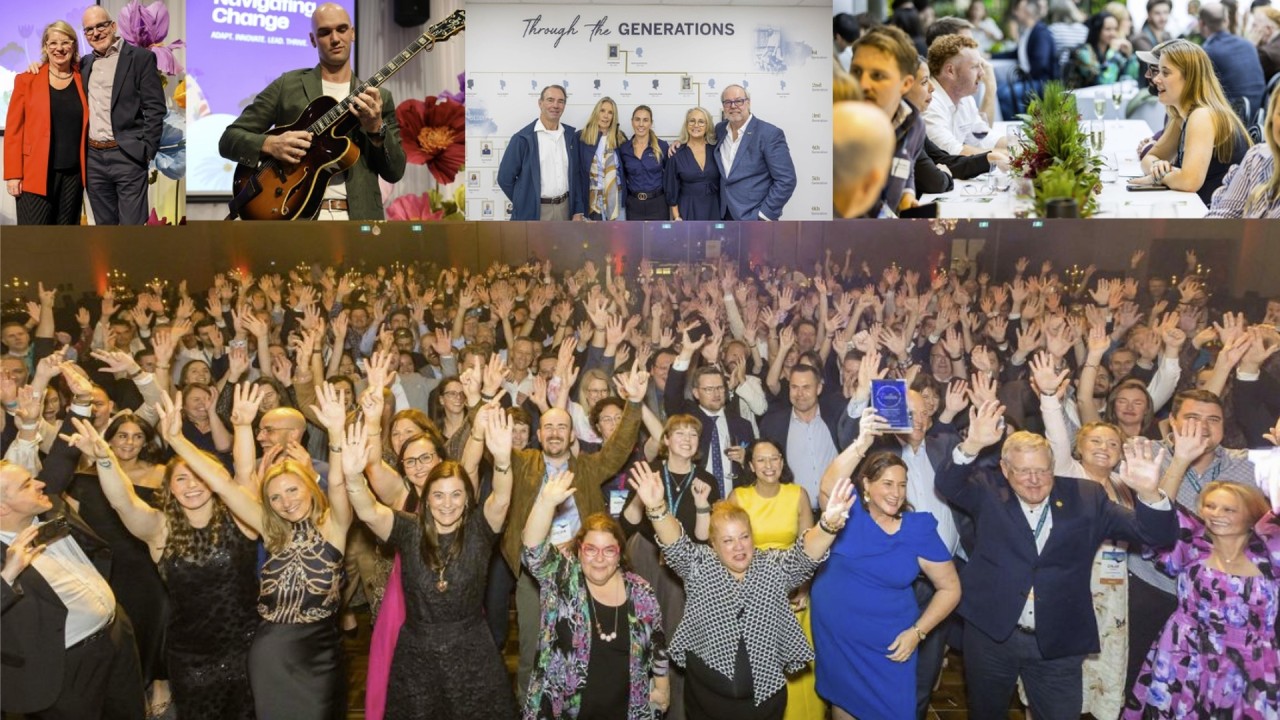
..who knew? I did, that’s why I’m an Advisor with FBA, though to be serious, I promise I won’t write the rest of this so flippantly – join me for a quick tour of the speakers, some insights from presentations I found, helpful and two of the most simple yet powerful tools I’ve been using this month to support clients creating change;
The 4 Sights
Ruinous Empathy vs Radical Candour
It Begins (at Scenic World)
First stop was Scenic World Blue Mountains, a family-owned experience business, with a legacy that began in 1945 when Harry Hammon transformed a disused coal mine into a visitor destination. Today, it features the world’s steepest passenger railway, Australia’s first cable car, the steepest cable car in the Southern Hemisphere, and a stunning cliffside boardwalk.
You can compare the above to the below, it’s a terrific engineering endeavour.
Now in the hands of the next generation, Anthea Hammon leads the business as Managing Director while her brother David Hammon heads Hammons Holdings, which has the contract for BridgeClimb Sydney and is involved with the Sydney Zoo.
In one of the most inventive way’s I’ve seen to engage an audience and tell a story, Anthea put 100 or so of us to a quiz where we had to write scores down as to how we rated each segment of the Scenic World story out of 10, before she told us about it, from innovation across the decades to the successful transfer of leadership.
The further from her self-assigned answer you got, the more points you scored (eg if she ranked innovation in the 80’s a 9, and you put 4, your score was 5).
A shout out to
As I write this I’ve just come back from lunch with a good friend talking dementia and parents, and something salient that stayed with me from Anthea was how in later years Harry (the Founder of scenic world) had an assistant who would pick him up each morning and take him to work, which due to his later years meant going off on adventures to anywhere but Scenic world, keeping the peace and Harry in activity.
Wednesday began with a masterclass in caring for your workforce, embracing globalisation to sustain wealth creation, and what you can do with quality branding and positioning, kicked off by Albert Garry Beard:
One thing I strive to support my clients with is competing on value rather than price, and if you know anything about marketing or branding and go and have a look at AH Beards website, it’s ‘Premium Sleep’ section, brand videos etc, you’ll see the reference I made to a masterclass in action.
Whilst I wasn’t in the session that ran in the conference featuring Garry Beard, Jonathan Coles and Iain Good of Premiumisation Partners, I believe this delved into how they positioned AH Beard to achieve this.
Now, behind the scenes, the business is an intense logistics exercise and teeming with people – something notable I heard from the current owners was a message passed down to them by their late father when it came to making business decisions;
“Always do what’s in the best interests of the families we employ” – it was noticeable in the factory vibe, and I noticed this on our way out;
In all honesty, I preferred the mattress in the foyer to the two in the presentation room, one of which apparently cost $80,000 – that said, I don’t know how much the foyer one cost, though I know $80K is the ceiling so… fingers crossed 😀
It’s Just Not Cricket
My first attendance at the hallowed ‘FBA Longest Lunch’ or should that be the Sydney Cricket Ground.. Or home of the Swans.. or the South Melbourne Football Club.. history is a funny thing.
It’s a neat format. Three courses, switching tables between each in different sequences to the other attendees. Everyone gets to move with space between serving and it’s a great vibe.
Midway through, the value per word was served in spades from Andrew Pridham AO in conversation with Brad Scott – I rarely get to hear such solid, direct, well-mannered serves of ‘this is how to achieve huge things’ from speakers, though when you look at Andrew’s resume you’ll likely understand where it comes from.
Though what exactly did he say? As I remember it – ‘do what you say, don’t rely on questionable sources, and remember why you’re here’ (wherever that may be).
This last one specifically related to the apparent signage in the boardroom of the Swans – “We are a football club”.
As I understood it, don’t be distracted, don’t forget your purpose, and don’t agree to things which move you away from your core, whether you’re a business, charity or in a personal relationship.
Day.. 1?
Yup, we only just got to the first day of the conference on Thursday, the above was Tuesday and Wednesday.
Catherine Sayer, FBA CEO kicked off noting that “We are delighted that new members are at the highest number this financial year that has been recorded.” and it was great to see Allegra Spender back on stage in a continuation of her elected seat.
Notably she called on family business owners to contact their local MP, to invite them into their businesses, and to talk to them about the challenges and needs we have, because our Politicians are human (seriously, go with me here, I wanted to be one) and we get the politicians we deserve. So, how about we be more engaged and thus deserving?
Andrew Klein held the ship steady as MC throughout the next two days, and had a self-described personal step up to the level of ‘influencer’ when one of the Day 2 speakers, Elisha Hopkinson, owner of APG & CO, who hold the brands SABA, Sportscraft and JAG, had the team supply a suit for the occasion;
Above, Elisha is speaking with Elizabeth Pilovski – “Curiosity is really important to allow change to happen… If you keep doing what you’re doing, you will blend in. Challenge the status quo.”
A Shrewd Opening
Often when I hear David Koch AM speak, I gain more empathy for my fiancée when she expresses a slight, unnerving frustration at times, with the confident way I say things, regardless of what I’m talking about.
David Koch’s summary for the year ahead
To be fair Kochie’s an Australian legend, his whip through on the economy and geopolitics was a useful level set to begin the day, paired with Merriden Varrall and Robyn Langsford.
Notably in the way only my friends who are data statisticians, research scientists, heads of investments committees for impact funds tackling climate and socioecomic crises can, or the more renowned ‘policywonks’ in Government can achieve, KPMG scared the hell out of everyone under the banner POLYCRISIS and some intense slides.
You couldn’t realistically navigate this complexity without… KPMG.. so I guess it did the job, though I’m 5,084 days sober at the time of publishing and this session made me want a drink, likely because I was already tracking most of what was being discussed, though in a single serving? Hmm.
Whilst we’re into geopolitics, business and a changing world, this is a great moment to introduce you to The 4 Sights.
As a Trusted Advisor to CEO’s and Families, I have one pair of eyes, though I like to bring four sights to discussions – Oversight, Foresight, Hindsight and Insight, and if you keep them in mind, you can too!
Simple, right? Kind of.. It’s hard when you’re close to something – the classic ‘work on’ and not ‘in’ the business – though it also requires casting a broad net and knowing who to speak to.
Using this as a frame for what we’ve covered so far, I’d say KPMG and David we’re focused on leveraging their Insight to reflect on Hindsight and give us a bit of Foresight.
Then bedding wise, the Premiumsiation crew used Oversight of the AH Beard capacities, mixed with Foresight for the changing demographics of wealth aspirational customers in Asia, to develop ‘Premium Sleep’ as a concept and sell a lot of high-ticket mattresses that could cover the cost of being so well-made, whilst positioning the brand distinctly amongst competitors (that’s my Insight).
If you think of wearing each sight as a hat it can be an easier way to get into it – put one one and discuss from that perspective – I find it a useful model in my role as professional best friend / non-conflicted sounding board when I’m bringing a second set of eyes to my clients endevours.
Göran Roos
.. on Families, AI, Quantum Computing and Bio-tech
This was an academic tour-de-force from Göran Roos with many slides that had me taking photos on my phone and then zooming-in to read (hand-outs or not doing this would have been great, though that’s how academics seem to roll on stage).
As with most things, true gold in the Q&A (and I’ll decipher my hand written notes for you), as I paraphrase what I remember:
“You can learn nothing from success, the luck and array of circumstances that must come together are never repeatable, no one will tell you this in their book on how they built an empire.”
Q. But Goran how do we actually innovate?
Get access to data no one else has. Acquire it through interviews with customers, through your website, through sales, however you do it, get unique data
Match this with public data to enlarge your data set (buy it from various platforms)
Use a tool to see patterns
Make a prediction about those patterns
Find someone who will pay for the prediction
Now that’s Foresight.
By Invitation Only
It was almost perfect satire to go from ‘you can learn nothing from success’ to being so thoroughly entertained by Bruce Keebaugh on stage with Tony McGinn OAM.
The only negative was that Chyka Keebaugh couldn’t be in attendance due to illness, as Bruce recounted the beginning of their journey to one of the world’s greatest hospitality and event empires at The Big Group, all the way from making and delivering sandwiches together in suburban Melbourne, to throwing weddings for royalty or flying orchestras in for events using the hiring families fleet of planes.
There’s little I can tell you in any worthy depth about the breadth of the story Bruce shared, other than people, passion and service are the keys to greatness.
One thing of note is he started his career waitering in Pelligrini’s on Bourke St Melbourne, a true institution and the last place I was sat with Nicole Stewart, awkwardly checking my watch and trying to have her arrive at 7:30 pm on the dot to co-incidence with the violinist and the friends I had hiding behind trees to propose to her, back in 2023 🙂
Emotional Men
Now we are into Parallel Workshops sessions for the afternoon, and I kicked off with Francesco Lombardo FEA (session host), and his clients Hugo Douglas and Sam Douglas in “Navigating Change in perspectives, Beliefs and Behaviours”
It was remarkable to see tall Scottish lads speaking on stage about their emotionally staid upbringing and then the emergence of their awareness and embracing of their own feelings, learning about themselves, their triggers, and the ‘gigs’ they play as Francesco calls them, plus the counter-point in behaviour they’d demonstrate when over-compensating for each gig.
I’ve previously run 4 years of my own ‘Dark Moon Men’s Lodge’ (guess when we met) in my backyard, been a Tribal Group Facilitator in https://menergy.org.au, on the fringes of the https://mankindproject.org and am an active Freemason, so it’s always a beautiful thing when I see emotional leadership in action.
And in this context, which I thought was an excellent frame from Francesco “Emotional Governance before Corporate Governance”. Bravo.
The Role of Family Offices
Not the best photo of a slide here, though take from it what you can, and I’m sure Brad Scott would love to chat more about it with you!
Fundamentally, does the complexity of growth serve you:
Jazzy James
Guess who’s been a pilot for 30 years and flies home after gigs at 1 in the morning on instruments in the darkness on his own plane? Australian Jazz legend James Morrison AM, and his sons, Harry and Will.
“Dad” in the car, “James” on stage – as said by one of his sons about how to keep professional and familial relations in balance when working in the family business.
The other really interesting thing for me was James insistence on never pushing his kids into music, and then letting them become eminent professionals in their own right before joining him in a quartet, so that they wouldn’t struggle to emerge or live forever in his shadow.
Phew.. need a cup of tea before we go on? Day 2 is a bit shorter, don’t fret, though before we get there, it’s time for:
Ruinous Empathy vs Radical Candour
As a leader or senior in your organisation or family, are you too nice to try and spare people’s feelings? Or are you able to be clear and direct, whilst demonstrating care through critiquing feedback?
You want to be operating in the top right – Radical Candour!
Like healthy eating, meditation and getting good, regular sleep, it’s fair to say this is aspirational and a skill to develop, though C’est la vie.
It’s also why I’m privileged to act on behalf of a small group of successful families and business owners as their Sense Maker, sitting in the middle of these two circles as we go on the journey;
Time for Chai (Day 2)
You know who backs up an awards dinner that finishes at 11 pm with a 7 am Women Leading the Way Breakfast? Yup, it’s the FBA. And you know who shows up to present 3 weeks after giving birth? Uppma Virdi, Founder of Chai Walli Pty Ltd.
Introduced by Aubrey Stillwell, Uppma unpacked the cultural, societal, financial, personal and psychological barriers that went into finding herself, founding her business and bringing the science and mysticism of the Veda’s, specifically Ayurveda, to the West.
That may sound like I’m being hyperbolic, though as an Indian woman telling her parents she was going to give up being a lawyer to be a manufacturer and seller of chai, the name itself ‘Chaiwala’ meaning to be a street vendor who sells tea, was a devastating thing to them, something only surmounted in the family when Uppma was on the front cover of the paper, from memory for winning the Forbes 30 under 30.
A few quick ones:
Chai means tea, don’t call it ‘chai tea’ – you’re literally saying ‘tea tea’
The recipes of https://chaiwalli.com.au are based on thousands of years of medicinal knowledge, some of them handed down by Uppma’s grandfather
Uppma’s road to success was based on the stories of herself and her community, focus on your audience, not your product
Speaking of chai, if you’re looking to do something beautiful, challenging, pretty dangerous and generally awe-inspiring, in 2018 I embarked with 2 friends on The Adventurists‘ Rickshaw Run with 70 or so other teams in an unsupported rally from Jaisalmer, Rajasthan to Kochi in Kerala:
It happens twice a year in different directions – check it out atWe drank a lot of chai.. constantly, we had a DIY chai flask holder in the rickshaw and I’ve still got the cups.
It’s Time For Smarter Intergenerational Conversations
Megan Gerhardt, Ph.D., Founder of Gentelligence.org and Professor at Miami University kicked off the Day 2 keynotes and refused to adhere to giving us a chart with the three bullet points associated to each generation.
Notably, Gen Z outpace Baby Boomers in the workplace, respect, connection, competence and autonomy are universal needs across the generations, and when it comes to all things include respect, we have semantic density around each word based on our upbringing.
Case in point, Megan shared an email a Gen Z student sent her saying that ‘due to feeling anxious about school and the state of her mental health, out of respect to her Professor and classmates, she would not be attending class’.
Now, for the Boomers and Gen-X in the conference, respect generally meant ‘shut-up and show-up’, yet for the younger generation, not so much… ahh conditioning.
Do you take the time to ensure you’ve set a shared context before diving into the content, or checking with your peers what a word means to them, and sharing your take on it, before powering on to disagree?
Megan gave us several ‘Power Questions’ throughout, and I’ve taken a screenshot of half of them above. You’ll have to go digging on her website to find the other half as it wouldn’t be fair to let you skip her excellent funnel > https://www.gentelligence.org/
Lastly I’ll throw in the above, because I’m an ’82 baby, which means I grew up with cassettes and VHS, can operate DOS, login to a Bulletin Board using a 33.6k modem, and now speak to my mum on face-time through a thin piece of digital glass via satellite in real time, when she’s on the other side of the world. What a time to be alive!
Victoria’s Real Secret
MAS Holdings, started in Sri Lanka in 1987 by Mahesh, Sharad and Ajay Amalean (pictured), joined on stage by his son, Kunal Amalean.
They set out in 1984 with $10,000 USD to buy 40 sewing machines, and in ’86 partnered on a handshake with MAST Industries to manufacture women’s synthetic dresses.
Now with 53 manufacturing facilities in 17 countries, and employing over 100,000 people, they design and develop in New York, London, Hong Kong and Colombo, and are behind a world of brands you’d know, love and likely have several garments from in your house.
Words of wisdom from Mr Amalean:
“Inequality festers” – things to look out for in the family
“Are you making money on my business? I want you to succeed” – ask your suppliers
“Why do you need to fit into my shoes? Why don’t you fit in your own shoes?” – don’t make your children bend the knee to your view of the world, free them to find themselves
The Man in Black
I’m riffing on the photo here, though to out-him for the business superhero he is, I’m talking about Richard Turner.
And guess what makes billion-dollar companies? The basics.
The presentation included:
How to articulate your Mission, Vision and Values
Finding your front man aka ‘who is your Mick Jagger’
The importance of systematising your business
A deeper dive on how marketing fits within sales
The need for a 1 year operational plan and a 3 year business plan
Intensely focusing on your customer to discover room for innovation
Having done my own Master’s Degree in Entrepreneurship and Innovation, I haven’t found a quicker level set than Richard’s presentation, and it’s a great place to start with clients to ensure you or I, and they, are operating in an agreed context when we’re figuring out if we need to do a sales OR marketing uplift!
Be honest, did you think ‘sales and marketing’ were the same thing?
Your Defence Force
It was notable how often Lieutenant General Natasha Fox AO CSC, Chief of Personnel for Defence Australia / ADF said the line ‘your ADF’.
Looking at socials, it’s apparent that’s the branding tagline, so props to her for being on message, though more over, she shared an inspired story of the rise of women to places of power, leadership and equality.
And more over, finishing the entire piece with a quote from Brene Brown was a lovely outro considering the nature of what the ADF are tasked to do.
I’d point you to this zinger of a summation on the bottom of the slide, which was shared in the context of our national makeup and from where we, as business owners, and the ADF, are recruiting.
Saving The Best For Last
Sick of hearing about and talking about the basics of AI? Did you know ChatGPT exists yet? Or that you can write prompts that make it do things?
I’m being very facetious here, and I am so grateful that our last presenter got on stage and informed us he wasn’t going to bother with any of that, even though he was here to talk about AI for the Future of Business.
Instead, we got a tour de force of excellent presenting and the next frontier of AI-enabled medical science through Hyperpersonalised Brain Care from the past CEO of Facebook for ANZ, Stephen Scheeler.
Since 2019 he’s been leading Omniscient Neurotechnology (o8t) and I won’t go into it in any detail, just go to the website and have a browse, you’ll be amazed – www.o8t.com.
In his own company, the guardrails or policy they have for using AI look this;
..and if you don’t have your own policy, it might be time to get on with it. Remember, don’t tell people what the policy is, ask them what they want it to be; they probably know more than you do and are using it in ways you hadn’t imagined.
And whilst we’re on the topic.. here’s a summary of Sam Altman’s keynote for Sequoia Capital‘s AI Ascent about OpenAI from 3 weeks ago, because after all we’re betting on the future right?
If you enjoyed this, please let me know what stood out to you in a comment, and give this a like and a share – it makes a huge difference to the algorithm.
On behalf of Nicole Stewart and I, don’t hesitate to contact either of us if you’re looking for a trusted advisor to discuss your family and business with.
Someone’s probably got photos of the farewell drinks, where we ended up in a hybrid of canapes and karaoke, though I don’t have them.
See you next time, don’t forget to subscribe to Smarter Impact!
Yesterday was the 3rd year of the Climate Investor Forum, another insightful event where I joined my colleagues and leaders of our nation’s businesses, institutions and investment funds;
The fundamentals of the Australian economy are set.
The laws, national institutions and funding mechanisms cannot be unwound without control of the Senate and the Lower House, irrespective of whatever a political leader may claim.
This has been the case for several election cycles, and we are most likely heading towards a minority government for the foreseeable future.
When we talk about energy and powering our cities, coal-fired power stations are being retired across the nation, and the cheapest form of electricity is wind and solar, something we lead the world in.
Not only is there no legal ability for the federal government to build a nuclear power station, it being a state issue, and no state premier yet being willing to say to their electorate they want to build a nuclear power station, building one is a 40 year proposition.
Add to that the only countries with the expertise to build Australia a nuclear power station are China, Russia and potentially India.
So what happens if enough gullible people get sucked into voting for Peter Dutton based on his marketing team’s ability to make enough Facebook memes that voters believe Australia could pull this off?
At best, this will create noise and uncertainty for long-term investors, continuing to see Australia as a global destination as we continue our economically inevitable transition to a renewable energy superpower.
Thus we find ourselves staring into the yellow mire of Clive Palmer buying up every billboard he can around independent electorates, spruiking his TRUMPET OF PATRIOTS moniker, and hoping he can funnel whatever votes he gets back to the Liberal party in exchange for backroom deals to continue digging up coal.
Don’t turn to your phone though, he spent $500k in 10 days on YouTube adverts in recent weeks, and then we have Peter Dutton doing his level best to stoke the fear and ire of everyone that’s ever had a grievance or been afraid in this country, walking lock-step with every announcement of the US that gets the base behind him, such as deporting dual citizens.
I continue to shake my head as the Australian entertainment (news?) press use the latest version of ChatGPT to feed us incendiary and unquestioning clickbait headlines in support of all this, instead of the journalism I grew up with.
Whilst these days it’s The Juice Media Honest Government Ads, FriendlyJordies, and Punters Politics aka Konrad Benjamin filling a gap, I can’t help wishing for some Clarke and Dawe, Shaun Micallef, or Media Watch.
Whilst vibrant political commentary might be a bit obtuse these days, no matter what anyone says, whoever gets elected will find themselves on day 1, and to quote my favourite line of the Climate Investor Forum, getting “mugged by reality”.
Enough Talk
Did you know over half of Australia’s population lives in the red areas?
Enough with incentives and policy settings.
Enough sitting around in well insulated, air conditioned homes with majestic views, pretending we’re doing enough to solve the affordable and social housing crisis.
I’ll be presenting an answer with Wayne Hughes next week at the Impact Investment Summit Asia Pacific in Sydney and taking you into detail on 5North.com.au, the Government, investor and stakeholder support we have, and how we’re going to fix things at a national scale.
“My brother and I don’t know if we want to take it over; dad’s not onboard with how we see the world; he won’t leave, and we’re thinking of moving on” – a 41-year-old running one of WA’s most significant private businesses.
⁃ They are relied upon by thousands of clients and can play an outsized role in the nation’s transition to a decarbonised economy
In the first instance, the kids (both early 40s and exceptional professionals) have been asking Dad to seriously reorientate the business for years, though they have not been given the lead to make it happen.
In the latter, the business hasn’t proactively prepared for this change and is now struggling to find someone interested in the handover.
These conversations illustrate a recurring theme for many family-owned businesses of today: the tension between generations, and the urgency to align their legacy with the future.
They also offer valuable moments for reflection;
What role should your organisation play in a decarbonised future? Is it merely about meeting compliance requirements, or could your business lead the way in creating sustainable value for your industry and community?
Are you empowering the next generation to innovate and succeed? Are they equipped and supported to drive the transformations your business needs, or are structural and cultural barriers holding them back?
How do you preserve the essence of what’s made your business successful, while adapting to the new priorities of sustainability, innovation, and resilience? What must change, and what must remain?
And critically, have you planned for a seamless leadership transition? Does the next chapter of your organisation have the clarity, vision, and direction it needs to thrive in a rapidly changing economy?
Answering these questions isn’t easy, but it is necessary.
And the reward is immense: a business that not only secures its legacy but also inspires a new generation aligns with national and global goals and takes its place at the forefront of a sustainable, future-focused economy.
A business the next generation wants, ready to lead the way forward.
Question: In reflecting on the above, how many times could you confidently articulate the answer or nod and say ‘yes’ out loud? If it’s less than 5 let’s chat.
325 signatories with USD 57.5 trillion in Assets Under Management?!
Climate action is already paying off, and can pay off even more, so how do we juggle our maelstrom of democracy in shifting geopolitics, powerful leaders stepping back from a climate agenda and the golden opportunity of our global net zero transition?
Join Rebecca Mikula-Wright and I from the recent Investor Group on Climate Change (IGCC) Summit, as we discuss what you need to do as a leader in your organisation to make this happen, what you may get caught out on, and how by aligning industry tipping points to maximise the speed of our climate transition, we can create cascading exponential impact!
What do you think? And would you agree that Net Zero isn’t about divestment, particularly when you own a slice of everything, everywhere?
A pleasure to be with you for another week! I greatly appreciate knowing you are reading, so please take a moment to click like and let me know.
And when it comes to change, the year is still young despite us being on the verge of December, so if you haven’t prepared for a powerful 2025, it’s as easy as beginning a new conversation!
It’s been a few weeks since the last Smarter Impact, I’ve been finishing client projects, a little overwhelmed by world events and attending the Global Nature Positive Summit 2024 as a delegate, which has kept me busy.
How have you been? And this isn’t a rhetorical question, I’d be happy to hear so feel free to reply via message or add a comment, particularly if you want to be in the next roundtable 🙂
Monthly Investment Roundtable
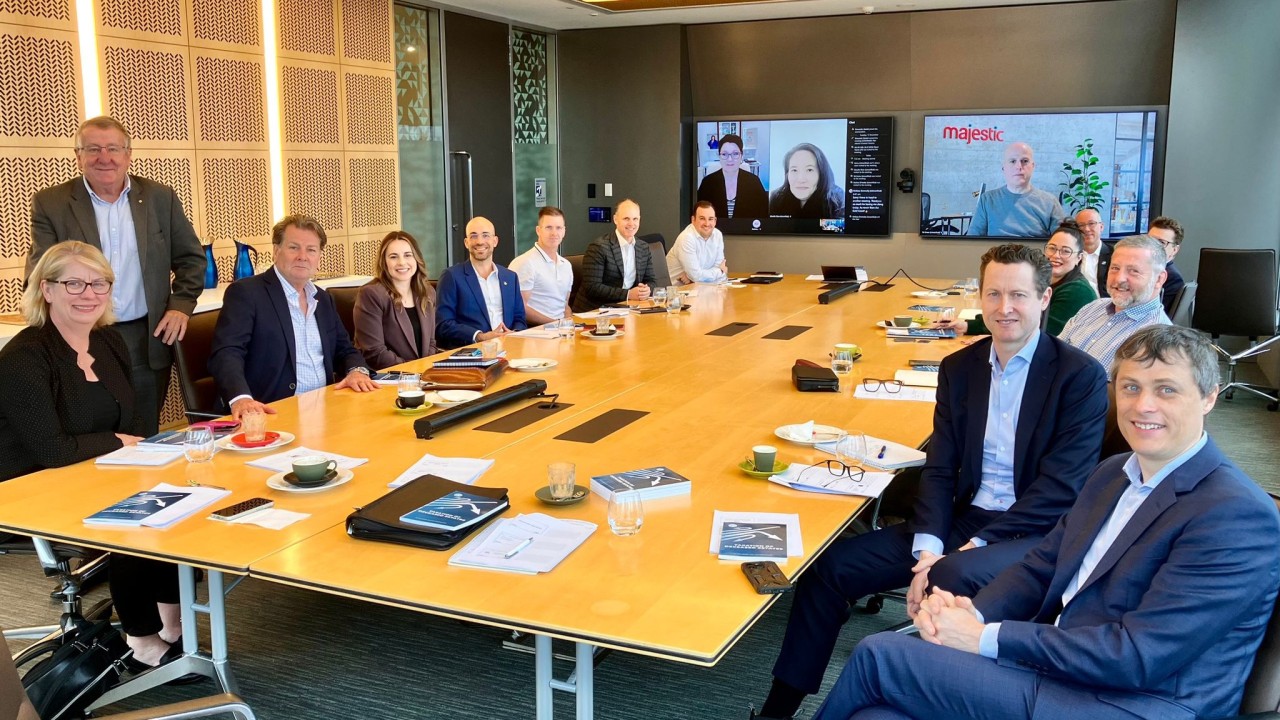
This past Monday, I convened my first pilot of a small group of business leaders looking for significant growth or investment, and together, we brainstormed solutions to their biggest challenges in a powerful 50 minutes; and you’re invited to the next one!
Each attendee provided questions beforehand, and my focus was to answer them with concrete next steps, provide some new questions they may not have thought of, and introduce them to networks of support.
The event was held in confidence, only attendees got the recording, and we had CEO’s covering Investing, Charities, Agriculture, Manufacturing and Professional services;
“Helped reduce my mental load” – “It can be lonely as the CEO, good to meet others leading their organisations” – “I loved that you positioned it to ask other questions – sometimes I’m not sure what I should be asking – some great points made”
These will be monthly, if you’d like to be invited to the next one, to be held Wednesday November 13th, at 10 am AEST, send me a direct message or leave a comment on this letting me know, I’ll be in touch to make sure it’s a good fit and then include you in the group.
Several colleagues in Europe also expressed their desire to attend so if that’s you, let me know and I’ll convene a session relevant for your timezone.
Question: Will you be joining us at the next Investment Roundtable?
“.. 2.6 trillion in harmful subsidies is spent from governments globally, plus five to six trillion of direct private investment – this is three times the amount of money that we are spending on armaments and weapons to fight each other in the world. We are spending three times more to fight nature!” – Marco Lambertini
“.. Nature positive is not a slogan – it is an ambitious goal and should not be used to imply something is green or nature-friendly. It refers to measurable outcomes that contribute to halting and reversing nature loss with significant benefits to society.
In parallel to the UN Climate Convention’s “net zero” emissions goal, this global goal is our guiding light in securing a nature-positive world by 2030, by taking urgent action to halt nature loss now. It mirrors the mission set in the Kunming-Montreal Global Biodiversity Framework..” – NPI
Thank you to the Federal Government and the NSW Department of Climate Change, Energy, the Environment and Water for the invitation to attend, which also included a set of field trips, and I went out to the Blue Mountains, you can see several of the photos here, and catch the conversation I had with Phil Ireland, CEO of Carbon Neutral by clicking here.
Question: How do you approach valuing nature in your organisation?
All Energy
I’ve just finished a swish new digital Electric Education Centre for an electric truck infrastructure partner that I’m excited to share with you soon. In the meantime, I’ll be at All Energy Australia next week, at least the Wednesday, focused on electrifying freight and significantly reducing our transport emissions! Say hi if you’re attending.
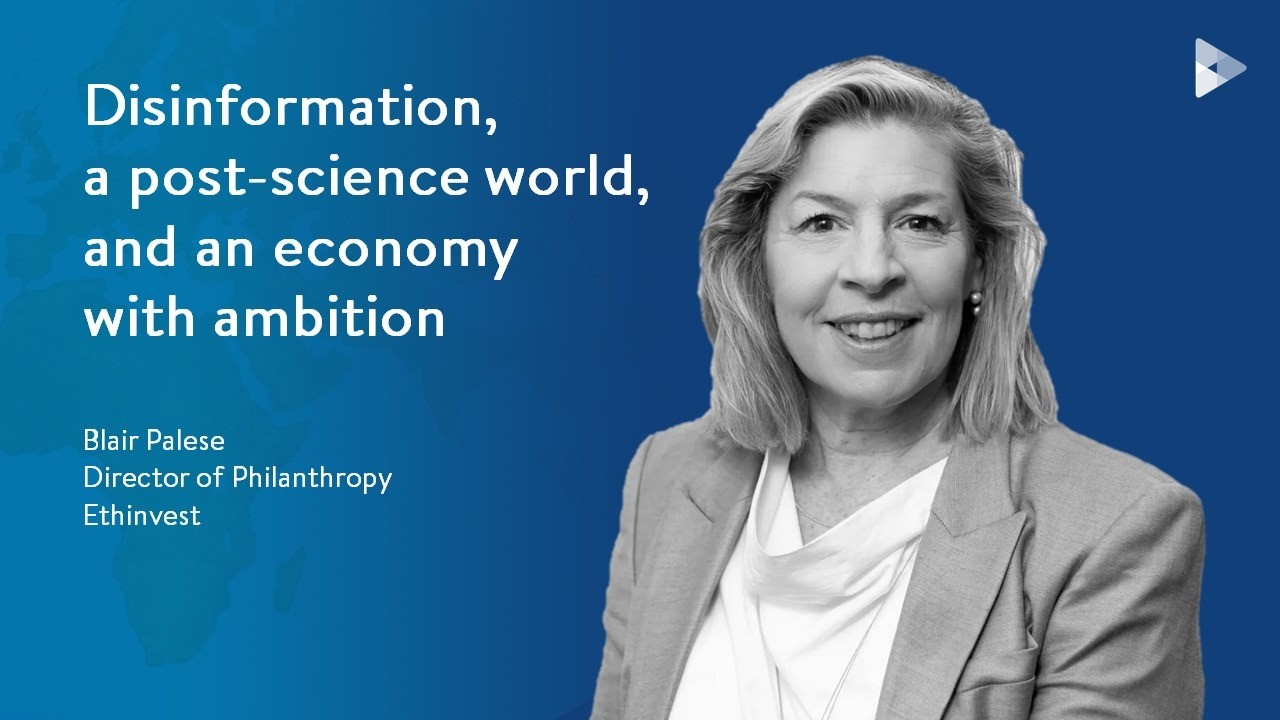
Philip: Greetings, folks. Philip Bateman here, and welcome to this edition of Smarter Impact. I help CEOs and boards with strategy, attention, and investments. If that’s you and it’s something you’re seeking to improve, do get in touch. And it’s my great pleasure to be here with Blair Palese, who’s the Director of Philanthropy for Ethinvest, one of Australia’s oldest impact advisors. She’s the Managing Editor of Climate and Capital Media, and she’s the founder of the Climate Capital Forum.
Philip: Blair, it’s a real pleasure to be speaking to you today.
Blair: Thank you so much.
Philip: Niceties aside, you’re an absolute badass getting out there and delivering, being the all-swearing, all-force for change.
Blair: I used to live in New York. It’s hard to break the swearing habit! Maybe the nice thing about people who are your listeners and yourself is, at some point, you get to a stage in your career where you’re just trying to have an impact. I pretty much get up every day and think about how I can make a difference and look for gaps of things that aren’t being done. That’s how I’ve jumped into these three roles. Hopefully, after 40-odd years in the not-for-profit space, climate, environment, working with governments and companies, you learn a few things along the way.
Philip: Our conversation today was going to be framed around fighting disinformation, renewable energy politics, Europe, and North America—all the things that keep our little big island obsessed in the media cycle. So I was interested, when you spoke to those different groups you work with, what do you think keeps these sorts of people up at night? When they’re tossing and turning in bed, what are the questions they’re trying to answer? We’ve got the renewables markets, we’ve got the politicians on the other side. What do you think is getting them, in terms of being able to succeed or look at the challenges we face right now, and how we deal with that as humans?
Blair: Oh, most definitely. Climate change is a driver. Even if people are somewhat skeptical about how fast or how it’s being produced, you cannot ignore the impact of extreme weather happening all over the world—it’s incredible heat and incredible cold at the moment, which was predicted by experts. How do you solve a problem that’s that huge without, for instance, destabilizing your economy or keeping your company profitable? And disinformation is a kind of terrifying, anti-democratic force that most of us feel like we have no control over or very few ideas about what we can do. Those two things together are what I hear the most about when I talk to all levels of people—either our investing clients or NGOs that we work closely with, and also media, to see where the focus is. Anybody with an eye to the future, whether you have kids and grandkids or whether you’re just worried about what kind of planet you’re leaving the next generation, can’t hide from these two things.
Philip: And in relation to disinformation in the media and the movement of these things, often stuff is a little buried, like the real things that are going on. For me, I’ve always had this idea of the good news. I meet people and NGOs and leaders who are just doing amazing stuff, and I don’t hear that good news in our media silos. What are some of the things you think we don’t know that people should?
Blair: Oh, good question, and so true. I mean, there are some good news sources out there, but you really have to look for them. Certainly not coming through in the mainstream media—some better than others. But yeah, it’s a pretty dark time. The best news of late is this study that happened about two weeks ago, reported in the Sydney Morning Herald and many other outlets globally. It showed that while growth in the economy of China is going up and also the rest of the world slightly—not a vast growth, but it’s not a decline—we’re seeing China’s emissions in particular not only level off but begin to go down. Scientists believe this may be the turning point on climate because China is the biggest emission producer, as it produces so much of what we buy and use all the time. So when I say China’s emissions are going down, I mean the world’s emissions are leveling and going down. That’s maybe something I didn’t expect to see as someone who spends most waking hours looking at climate change as an issue. I just didn’t expect to see that good news come across at this stage. I thought it would take us another 10, maybe 20 years to start getting there, and that every year we spent waiting, we’d have greater impacts. So, I guess the takeaway is that we actually could solve climate change, which is something you’re not going to hear people say often. It’s in our grasp that we could turn it around. When you think about the size and scale of the change we’re talking about—transforming not only our global energy systems but our global economy that’s been based on fossil fuels—those are pretty big things to be hopeful about if we continue to roll up our sleeves and get to it.
Philip: Yeah, absolutely. I distinctly remember sitting in the energy summits with the Australia-China Business Council about eight years ago, and they had the guys from FiveB there, who were working on the massive solar field in the Northern Territory, with the undersea power cable to Singapore. During that summit, they were charting the growth of renewables in China and how much they were implementing. I remember looking at the trend line and the base load of coal generators that wasn’t really going down. But what it didn’t account for was this massive spike in renewables, all being taken up with hydro and renewables. They’re installing the equivalent of five nuclear reactors’ worth of solar every fortnight.
Blair: Yeah, it’s about a gigawatt a day if you can imagine that. China is installing about a gigawatt of renewable energy a day. That is phenomenal and positive change. Granted, it’s easier in a country like China due to the nature of its government. It says it’s going to do it, and it does. That’s not as easy in a democracy like Australia, America, or even India, where many other factors play into decisions. But nonetheless, because of the size and impact and the dependence we all have on China for so many things that we buy and use, it’s a phenomenal positive step. I take that to heart and say, don’t give up yet. Ultimately, if we can solve this, what can’t we solve? It’s just such a scale of a challenge for us as a human race. To do it means we have the capacity to work together and solve all kinds of problems. That’s pretty inspiring, and more than ever, let’s double down and keep to it, not be sidetracked by distractions. If we look at the nonsense of a nuclear debate in Australia, it makes zero sense economically, from an energy time point of view, and from a risk point of view. It simply doesn’t make sense. Many similar things are being put out in the world to distract us and allow fossil fuels to continue. We can’t let that happen, or we won’t meet that goal.
Philip: I was looking at your Twitter account—oh, sorry, X account—and you’ve been like 70,000 posts deep. You’ve been…
Blair: Sorry about that.
Philip: No, I didn’t go that far back! But I noticed a variety. When I think about disinformation in the social space of the public commons, if you will, and discourse, like when I saw that meme about the five power stations’ worth of renewables being installed every fortnight, it’s just a simple thing. And your feed had a reshare about Woodside drilling offshore into the Barrier Reef, exploiting all the gas, with our Commonwealth having no tax whatsoever. That kind of stuff drives me crazy. And at the same time, in Europe, they’re developing overriding public interest laws, assuming that renewables are in the public interest. It’s a framework, a regulatory framework. This is a prompt from Tim Buckley in the background. What’s your take on adopting that mechanism or having something overriding public interest?
Blair: Really good question. In Australia, for many reasons, we’ve kind of lost that appreciation of public interest as a whole, whether it’s legally the right to protest or decisions taken around ownership of public assets. Often the business sector has lobbied hard against that when, in fact, even for a strong economy, it makes sense for some things to have an underlying appreciation that some things—like healthcare—have a public interest factor. One of the things I love most about Australia is our ability to get healthcare and the appreciation that it doesn’t just help me, but my entire community has access to healthcare, including mental healthcare. When I lived in the States and went to university in New York City under Ronald Reagan’s years, literally ending any funding for mental health facilities meant something. Mental health is still health. Patients were out on the streets of the city. It was dangerous to walk around at any time because there were people who had no access to medication or care for diseases like schizophrenia, who could become violent. You were consciously aware of it all the time. So when people think about healthcare, often they get that underlying sense of the importance of public interest in Australia, but they often don’t connect that with things like the energy transition. Why that will build a strong economy—giving us more energy diversity and security, and control over prices. The cost of living crisis in Australia is heavily impacted by the low cost of gas, which we buy back from companies that develop it here, produce it, send it offshore, and we’re buying it back at incredible cost. That’s insane, and no other country in the world is doing that with its own resources.
Philip: Yeah, heartbreaking. With no tax, and also no agreement that some of that has to stay here for our own population because, after all, it’s our resource.
Blair: Exactly. It takes a moment to consider what you need first to build a strong country, society, and economy. That’s that idea of public interest. We really have to consider what aspects of that are essential—healthcare being one of them, but I think resources are another. Things like public interest law, where people have the right to challenge and protest, because some of the best outcomes we’ve seen throughout history in any country have happened because of those two things. Individuals, communities, and groups have challenged wrongdoing, something that’s blatantly wrong, and the only way to change it was to start a movement to say, “We’re going to find a way to change that.” That’s certainly the case with climate change because fossil fuels, like tobacco, will be dragged kicking and screaming to the end of production. 120 years ago, it was great, right? It fueled the industrial economy of the world. But we recognized 50 years ago, or more, that the more we collect fossil fuels and carbon emissions in the atmosphere, the more danger we create for a heating planet. We’re seeing that play out. So now that we know that climate change is real, we’re going to have to make difficult changes. I’m always inspired by Europe’s ability to look at problems, find solutions, and get on with it, without the kind of corporate-sponsored and funded misinformation and disinformation we see in places like the US and Australia to try and prevent that change. Smart companies have every opportunity to make the transition and become profitable in the brave new world of renewable energy, battery storage, and other opportunities.
Philip: If we look at the population variation in size between Europe and Australia, and then we think of the profit motive of corporates and the small population we have here—not the drain, but the draw to higher wages in the private sector—regulation and government have nestled within that. We’re an industrial nation. So the regulator is arguably there to enable industrialization from day dot, rather than having a hard civic class of people who see civic duty and being in government as something you would do because you exist. It’s more, “We leave the people in the crater (Canberra) to figure it out; why would you go and be a politician?”
Blair: In that regard, I think, showing my political stripes here, Independents are an alternative to that capture. They’re not in a two-party system that was captured a long time ago by that thinking about making money for corporates, whether they’re paying tax or not. The rise of community Independents has come about because people are frustrated with that capture of the two-party system, in our case, three if you count the Nationals. They want something different that represents their communities and electorates’ interests. They felt they were not being represented, and we saw seven new community Independents elected, controlling the balance of power in the Senate, which is pretty dramatic. I watch the outcome of those seven plus the additional Independents elected into Senate and Parliament.
It’s remarkable what they’re doing. They’re talking about integrity. They’re talking about media independence. They’re talking about how we deal with truth in advertising laws, right? And disinformation and the impact on children—access to online pornography for children—things that have not been on the political agenda of this country for a very long time.
They’re pushing tax reform, right? Imagine that being sexy. In my electorate of Wentworth, tax reform is Allegra Spender’s key issue because it’s outdated. It’s truly outdated. And actually, part of our Climate Capital Forum is that reform needed to remove, for instance, fossil fuel subsidies that lock in. There’s an amazing story I heard yesterday from Tim Buckley, who, by the way, I confess, is in our forum. We spend a lot of time together.
But imagine countries like South America, where BHP has already electrified its entire big, large-scale mining fleet. Why? Because it makes sense. It’s cheaper. But hey, why haven’t they done it in Australia? Because of the fossil fuel subsidies. It doesn’t make it cost-effective. It’s sort of insane, right? We want them to electrify their fleet. In fact, it’s holding them back as a company to be a leader in this aspect of electrification.
Philip: The wild thing is, I’ve been in Brisbane with one of the largest industrial manufacturers of mining equipment, working on their self-driving, autonomous underground mining trucks. They were fully electric. So, we make it here in the country.
Blair: Guess what? We don’t make a lot of diesel, but we’re importing it so that BHP can use it in its trucks too—but not in Peru, where they’ve electrified.
Philip: And low-quality diesel that burns terribly. I don’t know if people realize that.
Blair: Constant reform is key, right? You’re not necessarily going to get the governance you need as a country if your political parties have been captured. I’ll say that Labor’s Future Made in Australia Act is a great attempt to follow the lead of the US IRA, to look for what makes sense here in terms of legislation that can help us do electrification better, renewable energy and battery storage better, and encourage the kind of reforms we need tax-wise to keep some manufacturing here and make it investment-ready for Australians to invest here—not overseas if you want to be invested. So, it’s a start, and it’s a good start. We’ve got to get it over the line. But that’s just the beginning. We have much more ambitious things we should be doing as an economy, and that takes a government that isn’t captured.
Blair: So, you’re all for more community independents because they literally look at every issue with their electorate’s concerns and what they want at heart. And that’s what government should be at its core.
Philip: Absolutely. I was very pleased to convene a session of Smarter Impact with Monique Ryan, Nicolette Boele, Julianne Schultz, and Despi O’Connor. We called it “Search for the Soul of the Nation” prior to the last election cycle.
Blair: Fantastic. I really hope Nicolette gets in this year again. She’s an old friend. In fact, one of the first people I met when I moved to Australia to work with her brother. It’s a very small world, but I help her when I can in any way I can. She’s an outstanding example of what we want in government.
She has worked in every kind of asset, responsible investment, which gives you a perspective about that challenge of keeping good investment in Australia. Renewable energy sector within government. We worked together at the Sustainable Energy Development Authority, so she has the kind of amazing career background that would be the perfect kind of skill set you want in government—not a career politician. I’m all for bringing people with expertise in, not people who’ve spent 30 years in a political party, and that’s what they know best.
Monique Ryan’s another great example of that—coming with a medical background, at the highest level, one of the best and brightest, and smartest of our medical professionals and research professionals. She just brings a whole different mindset and set of skills to government. More of that, I say, and less of career politicians whose only focus has been working within their political party.
Philip: It amazes me that people are in charge of things without experience and domain expertise. And they’ll say, “I rely on my people to inform me, and then I make choices.”
Blair: Yeah, but what’s it based on? Where’s your hands-on experience? As much as I spend a lot of time in Canberra talking to people about all these things, with the Climate Capital Forum in mind, still—400 fossil fuel lobbyists in Canberra every day. And virtually, I know one lobbyist for the emerging clean tech sector, which will be the future economy of this country, and where we want our kids to be working, and where we want to invest, right? Because we want to be at the cutting edge of that emerging global market. But we’re not going to do that with 400 fossil fuel lobbyists whispering in the ears of captured government officials.
The other artificially weird thing about Canberra—people live there during the entire sitting. I’m not saying they don’t go home to their electorates and meet with their own electorate. It’s a weird world where you get in your car in the morning, park under Parliament House, and have zero touch with real people facing difficult challenges, like paying their bills, affordability of housing, and food. They just live in a world in Canberra where that doesn’t exist—you just don’t see it, you don’t interact with it. You can’t get on the train in Western Sydney, Melbourne, or Brisbane and not see people struggling every day with the simple aspects of dealing with life—getting their kids clothed and fed, finding access to good schools, you know, all those things that should be driving how government thinks and works.
Even having lived in Washington, D.C., you have that. You see it, you can’t escape it. In Canberra, you really don’t. It’s an artificial world that worries me for Australia. It’s just not in touch with normal people living every day—the people you are there to try and support as the main priority.
Philip: So, autocracies can get things done. If the autocracy belonged to Blair, what would you do?
Blair: Well, it’s a very good question. In a funny way, I would put term limits on government officials so they couldn’t become captured. I wouldn’t take over the government and make it all my way. I’d find the best way to protect the democracy we have, but that needs improvement to ensure it survives things like disinformation. I’d find ways to ensure the smart people we’re talking about, who have incredible experiences and careers, see the call to government as something they might do for four years. We would be all the better for it.
Blair: The other thing I see constantly as an issue in the States and here is— in the US, it’s the Constitution; here, it’s many of our existing laws. They need to be regularly updated because things change a lot. Disinformation and the kind of challenge we see in a world of shrinking independent media is something you couldn’t have imagined 25 years ago. So, government has to keep up with that.
Blair: I think one key thing I would do is every 10 or 12 years, we have to reconsider—stop everything and think about what has to change right now. Don’t keep rolling on with what you have. In the US, the Constitution was very much written by founding fathers—only fathers. No women, no younger people, certainly no people of ethnic diversity. That world has changed, and yet that constitution was written by English white men who came to America. It was meant to be rewritten, and it’s never been rewritten. So, gun laws—insane, right? Why doesn’t America have gun laws? Because people are hanging on to something in a constitution that was written well over 200 years ago that no longer applies. The right to bear arms is an insane idea in a modern society.
And you’ve got open-carry gun laws in states in the South, where people are literally getting on a bus with a gun strapped around their chest.
Philip: I went into Oregon, and somebody said, “Don’t get out and pump the gas.” I asked, “What do you mean?” They said, “It’s illegal to pump gas in Oregon.” And I went, “But I could have an AK-47 slung over my shoulder?” “Ah yes, you can open carry, but you can’t pump gas.”
I don’t mean to diminish the discussion there because that was just silly.
Blair: No, no. That’s a great case in point where we have to update our laws to be relevant to the time we’re in. That would be the second thing I’d say—term limits and that we have to revisit government and what our priorities are.
Blair: Here’s a crazy idea that works really well over in Europe—always kind of leading in this. They’ve got democracy, but it’s definitely got a public interest driver at the core of their society. It’s this idea of citizens’ juries, where people are asked to get involved and help make decisions about big issues. They come to it with no expertise, spend a significant amount of time learning about one specific issue, and then they make recommendations to the government about what should be done. Disinformation is a perfect case in point.
This works really well—not only as something you do to see how it goes, but in many countries in Europe, it’s required that the government enacts what this group of the public recommends. It’s mandated. I was part of two of them in Australia—the first one and the second as the writer for the group. My job was to help them end up with a document of those recommendations. As a writer, my background is in communications. This group put unbelievable amounts of themselves into this process. They took it very seriously. Their recommendations were outstanding, and they handed it to a government official in Canberra who said, “I look forward to putting this on the library shelf.” I kid you not. “I’m going to enter this into the archive” was the gist. As in, “We don’t care. We’re not listening to what you had to say.”
Blair: The look on the faces of the group who’d put in four months of their lives into a process to make this paper through the recommendations was gutting. I mean, their confidence dropped. They had grown in confidence as citizens—to be asked and to value their opinion through this process—only for the representative who received it to literally pull the rug out from under them and say, “We don’t really care.”
Whereas in Europe, they have to take those recommendations seriously. So even the process of these regular citizens’ juries and the responsibility that people take up to be part of it has an incredible impact societally—they’re being listened to, and they’re being taken seriously. That would be my third thing. I would install citizens’ juries on 12 to 15 issues a year to help government make decisions that represent the public interest. And in my experience, almost everyone I’ve looked at has taken it seriously enough to put that public interest at the center of their decisions and recommendations.
Philip: In my experience of seeing groups that are doing grassroots movements to create political change, I’m a big advocate for creating kitchen table conversations. I’ve seen Cathy goes to Canberra and movements across North America and Europe. It’s this idea of a people movement—like the current US election coming up—the people versus the individual in most respects. The idea that citizens have agency, when it rises up, it’s very apparent. Citizens have a lot of agency.
I’d like to take that to disinformation now because truth is based on experience and values. When the average person hears about disinformation, I think the term only came into popular nuance during the COVID years when people suddenly thought, “What is disinformation?” I feel like I’ve been tracking it in a hyper way since the start of the Iraq war.
Blair: Well, yeah, that makes sense. And then Scott Morrison’s re-election campaign. I think that’s the first time Australia really saw Reaganesque tactics—good versus bad—amped up through bots, digitized, and with fake profiles used to simply poison the well, if you will, from a discussion perspective.
Philip: How do you think people react in general to the idea of disinformation? How would you frame it as a subject or a mechanism, or a pervasive evil that’s destroying lives?
Blair: It’s a post-truth, post-science world where people are honestly asking, “Is there truth? Is science accurate?” And that’s dangerous. When it comes to solving real problems in the world, we need to believe and understand that there are proven aspects of things that are happening. For instance, emissions in the atmosphere causing a warming of the planet that is essentially threatening our existence—that’s real, right?
One of the biggest challenges for people who are not scientists is understanding that science is never finished. The best we can do is take scientific expert opinion right now and know that things may come along and change that, but that doesn’t diminish what we know right now. A lot of people have put a lot of time into, for instance, finding cures for diseases or recognizing the trigger points that show us why climate impact is happening.
Philip: It also doesn’t mean that the current bit we’re pushing on invalidates everything below it in the stack.
Blair: Exactly. Physics is still a thing, right? Basic things we figured out thousands of years ago are still relevant today and important to build on. That’s a key thing about truth and science that we need to understand, which is being undermined by both dis- and misinformation.
Disinformation is an active campaign to spread chaos through making things up and getting people to believe things that are not true and then act on them. Anti-vaccine stuff was probably the most blatant example. People threw out all kinds of crazy notions and ideas about vaccines to make people say, “I don’t want them.” The impact is real—take polio, for example, where there’s a new outbreak in Pacific Island communities where it was once eradicated. Misinformation, on the other hand, is more about confusion—spinning something that could be true or maybe isn’t true.
Both are terrifying and are starting to impact everything we do. It’s not just about the information, but how trolls, algorithms, and social media are being used. And the diminishing aspect of independent media is another piece we’ve missed. Over the last 50 years, we’ve watched independent media shrink, largely because of free online content, making it almost commercially unviable for media to exist in the way it did. When I was growing up, media sources’ job was to impartially tell you news about the issues and activities in the world. That’s shrinking at an alarming rate, particularly in Australia, more so than in other developed nations.
In Australia, having one owner—Murdoch—dominate the media is dangerous. It’s more propaganda than media. If you think that’s your sole information source, you’re fooling yourself. It’s a little more subtle, but it’s absolutely there. The tactics used are dangerous and worrying when it comes to the dependency we all had on media as an independent source of information.
I’m also worried about the ABC being shifted with a clear mandate to try and stack the board with people on the right, linked to that propaganda agenda. I don’t know how to solve the problem of a diminishing, commercially viable independent media, but it brings us back to the question of public interest. Do we, for instance, ensure that the public interest—through sources like the ABC and SBS—remains independent? We pay for that, right? But what we don’t have in place are assurances to keep it independent.
In the US, despite the public broadcasting service being tiny, somehow, due to the size of the market, they’ve maintained some fantastic independent media sources. That needs to be a priority here.
Philip: In some ways, the population size gives rise to the fact that with a few key people willing to chip in an amount of money, you can do a lot with media. It doesn’t take a lot to get a story out, and whether people consider it disinformation because it’s factual or not is another issue.
Blair: Exactly. I grew up as a journalist watching journalism, seeing the news, and thinking, “This is great.” I know that emotions work better than facts, and that’s why I have a business. My work is about getting the facts out of people and helping them share it in their voice, in an emotional way.
Philip: Yeah, because we’re all human. We take in information with emotion as a key part of what builds the trust of hearing things. And that echo chamber we’re developing through dis- and misinformation is worrying. It plays on that emotion, leaving out the facts, and it’s easy to start heading down an endless tunnel of disinformation and believe it’s true without any check.
Blair: Exactly. The delivery mechanism is a key part of it. Algorithms purely seek engagement, so the most engaging things are often the most emotive ones—they don’t have to be factually true. They just need to be socially approved by being shared and engaged with.
Philip: And we’ve seen the photos of the mobile phone walls where someone is programming trolls to interject into our information through that social media network.
Blair: It’s terrifying.
Philip: There are simple gates, if you will, to people’s awareness. I’ve put up pictures before showing the mastheads of Murdoch papers across the country during Dan Andrew’s time, during COVID—personal attack after personal attack. You put them all as a wall, and you can see how coordinated it is.
Blair: Absolutely organized. During the last election, I was a victim of that—accused of some outrageous things just because I volunteered for my independent candidate in my electorate. Personal attacks of the most horrific kind for having a conscience and a concern about human rights issues. That was orchestrated across eight women in each of the independent seats. They spent hundreds of hours poring electronically through our social media posts.
It’s dangerous stuff. I’ve had a career as a journalist, a campaigner, and a spokesperson, so I can handle it. But for many women who were first-time volunteers for independents and were politically attacked and accused of horrific things, it’s not so easy. And you see the impact of things like robo-debt, where people who aren’t strong enough to handle it end up dead. Suicide becomes a real thing when stuff like that is thrown at people who aren’t used to it, don’t know how to cope, and don’t have support mechanisms.
That’s dangerous to our political landscape, and something we have to think long and hard about.
I want to mention one thing in relation to this that your audience might find even more worrying. We started Climate and Capital Media out of New York to cover the opportunity side of climate change through the voices of experts, because we’re seeing a diminishing business media that’s honest, legitimate, and truth-based. It’s a risk to our investors and economy. When Murdoch media buys the Wall Street Journal, we have to worry about the economic information we’re getting. Is that disinformation, misinformation, or propaganda?
Certainly, when it comes to the opportunities in renewable energy and clean tech, we have to worry about that because we’re not getting as much free, independent information. Bloomberg is fantastic, but you have to pay for that. If you’re a smaller financial advisor, how and where do you get legitimate market information about how fast things are changing? If all that’s free to you is a Murdoch source, you have to question its legitimacy.
That’s why we started Climate and Capital Media. I urge everyone to constantly question where they’re getting their information about the economy and markets. Sure, you can look at the Dow, but when you’re looking at interpretive material, you have to be very careful now and seek a variety of opinions to understand what’s really happening.
Philip: I spend so much time hanging out with growth-stage companies, climate boards, and going to conferences. I’m always excited about the next thing people are chipping away at. But when I speak to people who aren’t in those environments, they’re reading papers and thinking, “Why am I going to have kids? I should just give up because we’re all burning in a fire.”
Blair: And in some ways, that’s true, but they also don’t understand that they can get a climate job and help this along. People are pouring money into this thing.
Philip: Absolutely. I remember being at a maintenance company for power stations at Loy Yang about 12 years ago, and the guy said, “They’ve never maintained these things, so the cost to keep them online is huge, and they were end-of-life ten years ago.” But we keep saying, “We can’t go to renewables; it’s not possible.” And it’s these layers of contravention that make it all so complicated.
I get my information from the market, but then there are pundits and new journalistic comedians like Friendly Jordies and Punters Politics who are politically oriented and offer a different perspective.
They’re these early thirties, hilarious internet meme guys who are just saying absurd stuff while weaving in really pointed facts—media you’re not getting from mainstream sources. We’ve gone from Ray Martin and 60 Minutes to Friendly Jordies with the death of traditional media in the middle and the complete sole ownership of the Murdocracy across it all.
Blair: It’s a really challenging landscape. Imagine you’re 19 and trying to figure out the world. It’s even harder because you don’t have the memory we do of a solid independent media where you had reliable sources of information.
I’d like to say one thing about business and investment information. I went to a presentation by an investment firm and sat next to an older gentleman—an investor, retired now, but still doing his own investments. He asked, “So what do you think about uranium?” and I was like, “Oh, terrifying, right?” But it’s working for him.
This idea that uranium and nuclear are going to become the best solution to our energy problem—there isn’t a single bit of legitimate market information that would tell you it’s a good bet, for a million reasons. The sheer cost—compare building a nuclear reactor to renewables. There’s not even an existing commercially running small modular reactor anywhere in the world. It’s a lovely idea, but it’s not going to happen practically in our lifetime.
So moving on from that, what we have are old, antiquated technology reactors that are extremely expensive. Australia’s never had one, so we’d be starting from scratch. On top of that, you’re looking at six, eight, even twelve times more expensive than renewables and battery storage, which are easy, fast, deployable anywhere, and diversified. It just makes 100% sense from a market point of view. But here’s someone sitting next to me, hearing conservative voices saying what he wants to hear: uranium. It’s a diversion from the speed at which we need to switch to renewables, battery storage, and a range of other efficient, AI-driven ways to use energy.
Philip: He’s not hearing that, because is it generational thinking for the benefit of the public as an outcome of citizens’ juries and civic responsibility, or is it a political wedge issue to get opposite political support?
Blair: Absolutely. And if you’re an investor, be worried, right? You’re going to have to look a lot harder. I recommend Renew Economy—watch it every day. It’s just following the money and the success stories of who’s breaking through and the companies that are pursuing this transition.
Philip: I was at a Wind and Energy conference, and Corio Generation—Macquarie bought the UK Green Investment Bank, and the Copenhagen Infrastructure Partners—they are not spending billions and billions of dollars on nuclear reactors.
Blair: In fact, let’s face it, Europe is still rolling them back. Sure, due to the Ukraine and Russian situation, there’s a pause of, “Oh geez, we can’t do that as fast as we want to.” But the truth is, it just doesn’t make sense.
And you look at a company like 5B, and you should be excited, right? SunDrive, be excited, right? Australia’s still at the cutting edge of some of the best new technology and renewables in the world, even better than China. Are we doing all we can to make the most out of that economically? Not even close. So as a nation, with the public interest in mind, let’s look to this stuff. There’s big opportunity here.
Philip: And is that because the new economy is collaborative and not competitive?
Blair: I love that. And I think it is collaborative and less competitive. It’s not to say people won’t make money, but what works to make money in this new economy of the low-carbon world is that you can’t be successful without collaborating across the supply chain, and potentially with other countries who produce parts of that supply chain that you’re not going to produce in your own country. That’s true in the States, it’s true in Australia. So that collaboration piece is important, but also great. It’s a new, more distributed way of thinking about how a company operates, and less monolithic and top-down. There’ll be thousands and thousands of successful companies in this new clean tech world, and that’s exciting. That’s more opportunity to work in it, invest in it, have it here in Australia.
We have unique things that are great here. We have the world’s most incredible amount of rare earth minerals. We have the smarts to build circular battery systems that will recycle and just use them over and over again. Incredible. We have smarts in IP and technology, quantum, etc. I’m not all for going to the US to do partnerships in quantum. We have that right here. Let’s use our own smarts—from a national security point of view as well as from an economic point of view. Let’s get smart about making Australia our priority economically, and I still think we’re lagging behind, thinking we’re not good enough. We are 100% good enough, and we just have to support our own.
Get them in a position where they can be in the market globally, doing what we do best, which is the smart side of it—not the labor side of it. We should become the Scandinavia of the Southern Hemisphere and build the systems and the how-we-work-it-in, and then we should be exporting that lower-carbon alternative to things like iron ore and steel. We have every ability to do that stuff, but we’ve got to get behind it.
Philip: Yeah, and you know, props to the marketing department of the government who came up with the Future Made in Australia Act.
Blair: I know, right? Says it all. That was a clear home run, that one.
Philip: What’s something you’ve changed your mind about in the last six months?
Blair: That’s a really great question. I change my mind all the time, and again, one of the challenges of our post-truth world is people getting attacked for changing their mind. Don’t do that. Changing your mind means you’ve got a brain in your head and you’re using it as the world changes. We have to support people changing their mind.
I would say the thing I changed my mind about was that America was over, honestly. About six, seven weeks ago, I thought Trump was in and that’s it. They’re going to rip out every bit of the US IRA that’s transforming their economy and bringing back manufacturing that looked impossible five years ago. They’re going to rip that out and go back to fascism. Quite frankly, Trump has a fascist platform. If you haven’t seen that document, I recommend you dive into the reports on what’s in it. It’s the destruction of their democracy in a very clear and directed way.
So given that, I’ve changed my mind because if you want to get kind of creative about thinking about what just happened with Biden and Kamala Harris, I think they planned it a good while back. That delay tactic was to allow them to have everything in place when he did step back and she stepped up, which is just smart politics. When you’re up against a Trump who will play every lowball game to win attention without any content whatsoever, that’s where I changed my mind.
Philip: Yeah. If you’re not excited about watching that transformation, I think it’s exciting. I took Tim Walz’s initial speech in Wisconsin and stuck it up online. Look at this for speechcraft—it’s beautiful.
Blair: And to use “freedom” and that idea that what’s at risk is our rights and freedoms in this election goes right to the core of what’s been happening in the US media in the Trumpian world, and it’s resonating instantly. One word—freedom. What’s at risk? Freedom. It’s resonating with people who were not necessarily big Biden supporters or Democrat supporters because she’s communicating really well about what’s truly at stake in a sensible, truth-based way.
Philip: I struggle with the entrenched polarization of America. When I hear two people on stage talking about, “We’re going to war with each other. When we fight, we win. We’re going to fight each other,” I’m like, maybe we’ll get a few more percentage points one way or the other, but I don’t think it’s going to do anything for the future.
Blair: “We need to fight, and then we need to heal.”
Philip: Oh, this is “hearts and minds” and invading places.
Blair: Yeah, it’s bad language, isn’t it? Aren’t we smart enough to work beyond that? As a world, we should be problem-solving-based. We’ve got a lot coming at us all the time. As things change, we need to be ready for that.
Philip: As we wrap this up, where do people go for good, insightful market knowledge on investments in climate?
Blair: Climate and Capital Media. We do work with—we partner with—a lot of similar organizations. One in Canada, a few in Europe and the UK, which is Green Central Banking, which looks at the pointy end of finance. EthInvest—we do a lot of good work around good impact investing, what that looks like if you’re interested in that. And then the Climate Capital Forum—we look really at Australia. What can we do here to make sure that we, as an economy, get the best out of the emerging clean tech world and the NetZero market that’s emerging? We think it’s an amazingly positive opportunity to be at the center of that global market, and we have that chance if we take it.
Philip: That’s really wonderful! And just a reminder, if you’re a CEO or a Board Member out there and you’re interested in positioning yourself within those markets and going to these people, I’d love to help out with your strategy, attention, and investment. Thank you so much for joining me, Blair. It’s been a real pleasure, and I’m going to stop there.
Blair: Thanks, Philip. It was great. Appreciate it.